A Fictional Language Feels Old When Change Leaves Evidence
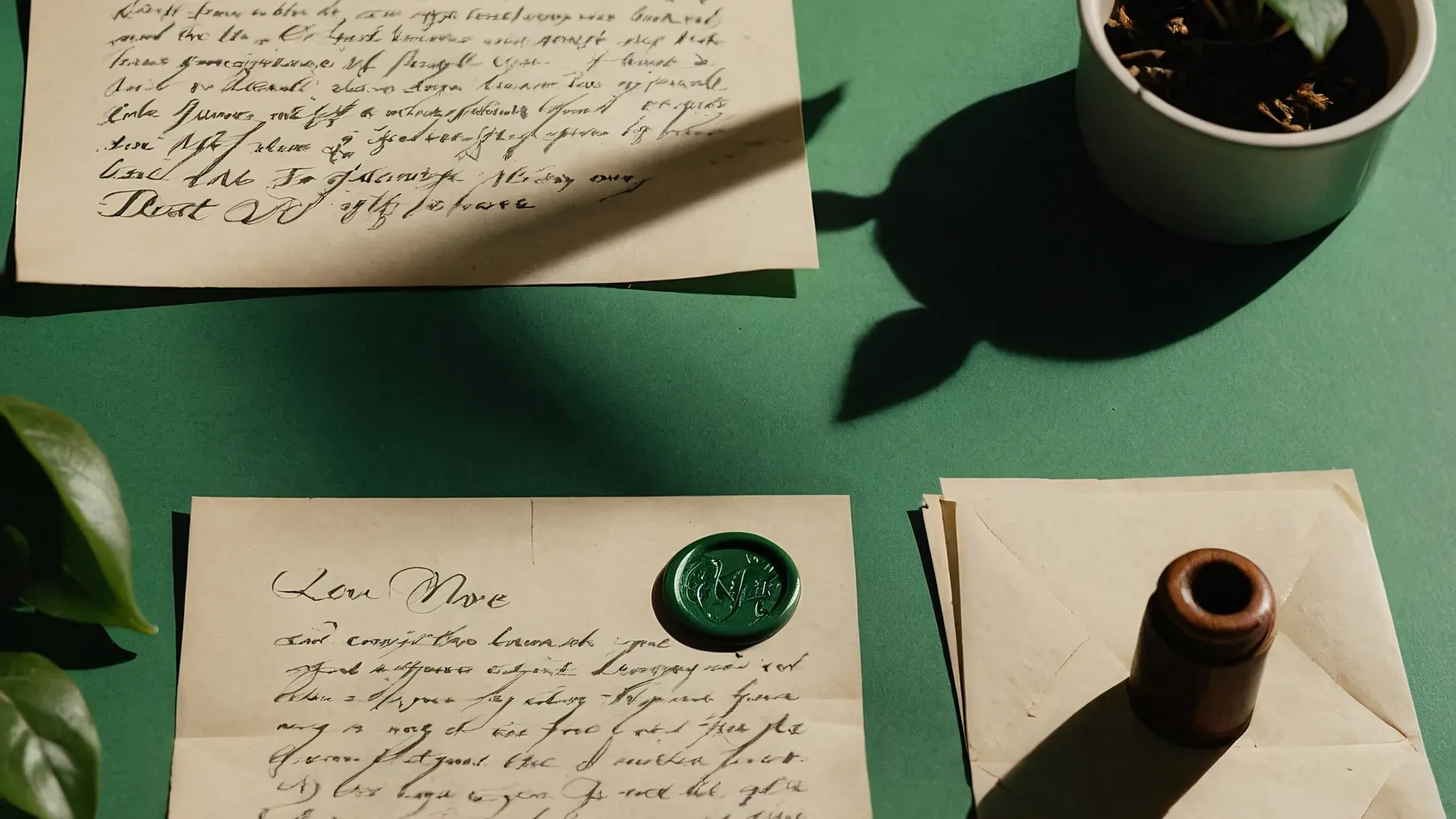
A fictional language feels historical when its modern forms can be traced to earlier forms through repeatable changes. A port name keeps an obsolete spelling. Two regional words share a recognizable ancestor. A legal term entered during an occupation and still sounds slightly foreign. An ordinary future marker began as a full verb centuries ago. These details imply generations of speech because each one has a cause.
That gives a novelist a manageable goal. You do not need to construct every tense, pronoun, and noun class before drafting. Build enough of an earlier stage to derive the words, names, phrases, and grammatical habits that will appear in the story. For many novels, a compact set of twelve to twenty roots, two productive affixes, and three or four ordered changes can create substantial evidence. Expand the system when the plot demands more.
The method below follows Old Saren, once spoken along a river kingdom. After the kingdom divided, an inland variety remained relatively conservative while a busy port developed new pronunciations and absorbed the vocabulary of foreign administrators. The example stays small enough to audit, yet every modern form comes from a recorded stage.
Decide what history the reader can actually encounter
Begin with story evidence instead of a complete proto-language. List the moments when linguistic history can affect interpretation, status, or action. An archivist must match an old gate inscription to a modern district. A port official uses a legal word that arrived with an occupying power. An inland speaker deliberately pronounces a royal title in the ancestral fashion. A ritual repeats grammar that disappeared from ordinary conversation.
For each moment, write the historical claim the scene needs to prove. The gate inscription and district name need a shared ancestry. The administrative term needs a contact event and a reason for borrowing. The ritual needs an older grammatical form preserved by an institution. This converts vague “depth” into a finite design brief.
A useful evidence list might include:
- four modern place names derived from older landscape words
- three kinship or rank terms whose use changes with region
- one borrowed administrative family of words
- one formula preserved in worship, law, or ceremony
- two common words whose meanings shifted after a political event
- one spelling that records a sound speakers no longer pronounce
This article therefore differs from the earlier guide to inventing pronounceable fantasy words, which focuses on phonotactics, spelling, stress, and reader decoding. It also serves a different job from a fictional naming system, where authority and social address determine which name form a person may use. Here, the central question is diachronic: what sequence of changes produced the form that appears today?
Once the evidence list is clear, write a short external history of the speakers. Mark separation, migration, trade, conquest, religious reform, literacy, and standardization. Linguistic change also has internal causes, but contact and institutions determine which varieties meet, which words carry prestige, and which writing conventions survive. The Open University’s history of English shows both forces at work: sound and grammar changed internally while Norse and French contact contributed vocabulary, scribal practices, and domain-specific distinctions.
For Old Saren, the relevant outline is only five lines. River communities share one court language. Highland settlements lose regular contact with the port. Foreign merchants establish a tax administration in the port. A temple preserves the old river oath. A later printing guild fixes court spellings even as pronunciation continues to move. Each line will leave a different kind of evidence.
Derive modern words from a small source stage
Create the ancestor forms before trying to make modern varieties look old. The source stage needs consistent sounds and word shapes, plus whatever grammar the visible examples require. Old Saren permits consonant-vowel syllables and favors three-syllable words with stress on the first syllable. Four useful roots are enough to begin:
| Old Saren | Meaning in the early kingdom |
|---|---|
| ketira | river gate |
| maketi | toll clerk |
| satara | protected passage |
| meruna | oath sworn before crossing |
These forms are intentionally regular. History will create the complexity. David J. Peterson identifies phonological, lexical, and grammatical evolution as three major areas of language change, and his examples repeatedly begin with coherent older material. Mark Rosenfelder makes the same practical point in The Language Construction Kit: related words should change through reusable rules rather than individual distortion.
Write each sound change as a rule with an environment. “Some consonants soften” is difficult to apply consistently. “The sound t becomes d between vowels” tells you what changes and where. The early Port Saren sequence is:
- t becomes d between vowels.
- k becomes ch before e or i.
- An unstressed vowel at the end of a word disappears.
Applied in that order, the source forms produce these results:
| Old Saren | Inland Saren | Port Saren | Meaning |
|---|---|---|---|
| ketira | ketir | chedir | river gate |
| maketi | maket | mached | toll clerk |
| satara | satar | sadar | protected passage |
| meruna | merun | merun | crossing oath |
The two modern varieties still look related. Their differences also form patterns a reader can learn without seeing the table. A gate named Ketir inland and a port district spelled Chedir now imply a branch in the language family.
Rule order matters. In maketi, intervocalic t becomes d while the final i is still present. The later loss of that vowel leaves d at the end of mached. If vowel loss occurred first, the t would no longer stand between vowels and the result would differ. This is useful evidence when you work backward from a modern word: the form can reveal which change happened first.

Keep a ledger that can explain every visible form
Record the changes by stage, not as notes attached to isolated vocabulary. A practical ledger has six fields: approximate date, speech community, change type, rule, affected examples, and surviving story evidence. One row might record the loss of final unstressed vowels in both regions. Another records Port Saren palatalization before front vowels. A third records a spelling reform that affects official documents but leaves temple inscriptions untouched.
The ledger prevents two common errors. First, a word cannot undergo a change that occurred before the word entered the language. Second, a historical spelling cannot represent a pronunciation that did not yet exist. If the foreign tax word arrives two centuries after Port Saren changes k before e, that older change should not automatically alter the loan.
Regularity does not mean every modern form must look perfect. Analogy can remodel an irregular form after speakers associate it with a productive pattern. A conservative institution can restore an old spelling. A place name can preserve an earlier sound after everyday vocabulary changes. A later learned borrowing can enter from the ancestor language. The exception needs a dated cause in the ledger.
Test the rule against every eligible form, including affixed forms. If the plural suffix begins with a vowel, a consonant that sits at the end of the singular may become intervocalic in the plural. That produces an alternation speakers experience as grammar even though it began as sound change. Peterson’s examples show how ordered changes can create irregular-looking modern paradigms from regular earlier ones.
You can also work backward when the story already contains a name you want to keep. Find a plausible source form, then apply the same history to several related words. One successful derivation is insufficient evidence of a language. A group of cognates, words inherited from the same ancestor, teaches the reader what belongs together.
Let meaning and grammar move with the sounds
A convincing language history changes more than pronunciation. Meanings narrow, widen, improve, deteriorate, or move through metaphor. Frequently used words can lose specific meaning and take on grammatical work. Peterson calls this loss of lexical specificity semantic bleaching, one step in grammaticalization.
Old Saren meruna begins as the oath sworn before a protected river crossing. When royal officials require the oath at every licensed gate, the word comes to mean the permission granted by that oath. After the monarchy falls, Port Saren merun survives as the ordinary word for an official permit. Inland speakers retain the ceremonial sense. A customs argument can now hinge on both parties using the same inherited word with different boundaries.
For grammar, suppose Old Saren hara means “to intend.” Speakers often place it before another verb: “I intend to cross.” Over generations, the construction becomes the usual way to mark future action. The verb loses stress and shortens to ha. A temple recitation still uses the full form, while modern dialogue uses the reduced future marker. The contrast gives the ritual an audible age and lets grammar carry history without exposition.
Track these developments as chains:
- concrete meaning, repeated context, broader inference, modern meaning
- independent word, frequent construction, reduced meaning, grammatical marker
- productive affix, sound change, opaque modern ending, later analogy
Each arrow needs a stage. A glossary that simply declares one word “ancient” cannot show how it became modern. A chain lets the writer decide which generation understands the old sense, which institution preserves it, and which misunderstanding can occur in the story.
Make borrowing prove contact between speakers
Borrowing begins with people who use both languages. Einar Haugen’s foundational analysis argues that linguistic borrowing requires at least some bilingual mastery, with widespread borrowing implying a larger bilingual community. That keeps contact history concrete. Armies, markets, schools, intermarriage, worship, administration, and migration create the speakers who carry forms across a boundary.
During the foreign administration, Port Saren adopts brask, the occupiers’ word for a tax office. Port Saren does not permit the initial br cluster or a final sk cluster, so bilingual speakers adapt the word to baras. It enters after the older sound changes, which explains why it does not resemble an inherited Saren root. Officials then create barasi, “tax clerk,” using a local suffix. The borrowed root and native word-building now coexist in one form.
Choose borrowed vocabulary by domain. An occupying bureaucracy may supply terms for assessment, permits, courts, and ranks while household vocabulary remains inherited. Traders may transmit measures, foods, tools, and routes. A religion can introduce titles and abstract concepts. The Open University example of French influence on English demonstrates how prestige and institutional use encourage borrowing in particular fields.

Borrowing can also split meaning. An inherited word remains common while a prestigious loan takes a narrower legal or scholarly sense. A later generation may borrow a second version of the same ancestral root through a different route. These doublets make history visible because related forms carry different social weight.
Allow writing to preserve an earlier voice
Writing often changes on a different schedule from speech. A script may be borrowed from neighbors, standardized by printers, protected by priests, or reformed by a government. The Open University notes that English spelling was already becoming fixed while the Great Vowel Shift changed pronunciation, helping produce the modern gap between written and spoken forms.
In Saren, the printing guild chooses court spellings from before the port changes. Modern speakers say chedir, yet official seals retain ketira. Temple stonework uses an even older script. A revolutionary poster respells the district phonetically as Chedir, turning orthography into a political choice. The reader sees three historical layers without receiving an alphabet chart.
This also gives an inscription scene a technical basis. The archivist does not solve the puzzle because two words happen to look vaguely similar. They recognize the regular k to ch correspondence, restore the lost final vowel, and compare the legal meaning of merun with the older crossing oath. Each inference follows evidence already present in the language.
If the story needs a script, the guide to creating a fictional writing system can help connect materials, literacy, and document use. Keep language change and script change separate in your notes. A spelling can remain stable while pronunciation moves, and a reform can alter letters without changing how people speak.
Preserve the derivation inside NovelOS Studio
The hardest part is usually continuity. One rule affects place names, titles, dialogue, maps, inscriptions, and scenes written months apart. NovelOS Studio can keep the derivation beside the world and manuscript material it governs.
Use the studio as a chain of evidence:
- Create a Saren language Lore entry in The Architect. Its description can state the source stage and modern varieties. Properties can hold rules such as “t becomes d between vowels,” with examples in the values.
- Add dated changes to the Lore Chronicle: regional separation, Port Saren voicing, foreign administration, the arrival of baras, temple preservation, and the printing standard. Historical causes remain distinct from the novel’s scene order.
- Create World entries for the river kingdom, inland settlements, port district, temple, and tax office. Connections can link the language Lore to those locations, related characters, scenes, and manuscript chapters.
- Record each speaker’s era, biography, voice, and regional ties in The Oracle. A port official, inland pilgrim, court-trained archivist, and temple reader should have different reasons for choosing a form.
- Place linguistic discoveries on Blueprint Scene Cards. The card can keep its synopsis, time setting, point of view, associated characters, locations, and items together. Timeline View then checks the order in which the reader learns the correspondences.
- Use Spark for exploratory root lists, change tables, reference images, and audio experiments. Once a form becomes canonical, copy its derivation into the relevant Lore entry so brainstorming does not quietly overwrite history.
- Draft the inscription, argument, ritual, and translation in Manuscript. If surrounding prose becomes dense, Alchemist can suggest revisions for a selected passage beside the original. Keep established fictional forms unchanged unless you deliberately revise the ledger too.
Finish with a reverse audit. Start from every invented word that reaches the manuscript and walk backward through the ledger. Confirm its entry date, sound changes, meaning at that stage, spelling convention, and speaker. Then read forward from the ancestor and verify that the rules produce the visible form. The backward pass finds unexplained decoration. The forward pass finds inconsistent rules.
A historical fictional language does not need endless vocabulary. It needs consequences that can be reconstructed: a lost vowel, a borrowed office, a ritual meaning, a reduced verb, an older spelling, and speakers who value those forms differently. NovelOS Studio keeps that history connected to locations, institutions, characters, and scenes, so each invented word arrives with evidence of the life that shaped it.
Sources and further reading
- Bethany Brookshire, “How to Invent a Realistic Language for Fictional Speakers,” Science News
- Marisa Lohr, “From Old English to Modern English,” OpenLearn, The Open University
- Einar Haugen, “The Analysis of Linguistic Borrowing,” Language
- David J. Peterson, The Art of Language Invention: phonological, lexical, and grammatical evolution; ordered sound change; semantic bleaching; and naturalistic language history.
- Mark Rosenfelder, The Language Construction Kit: regular sound change, language families, borrowing, semantic change, and practical derivation methods.