Fantasy Dialects Form Gradients Across a Map
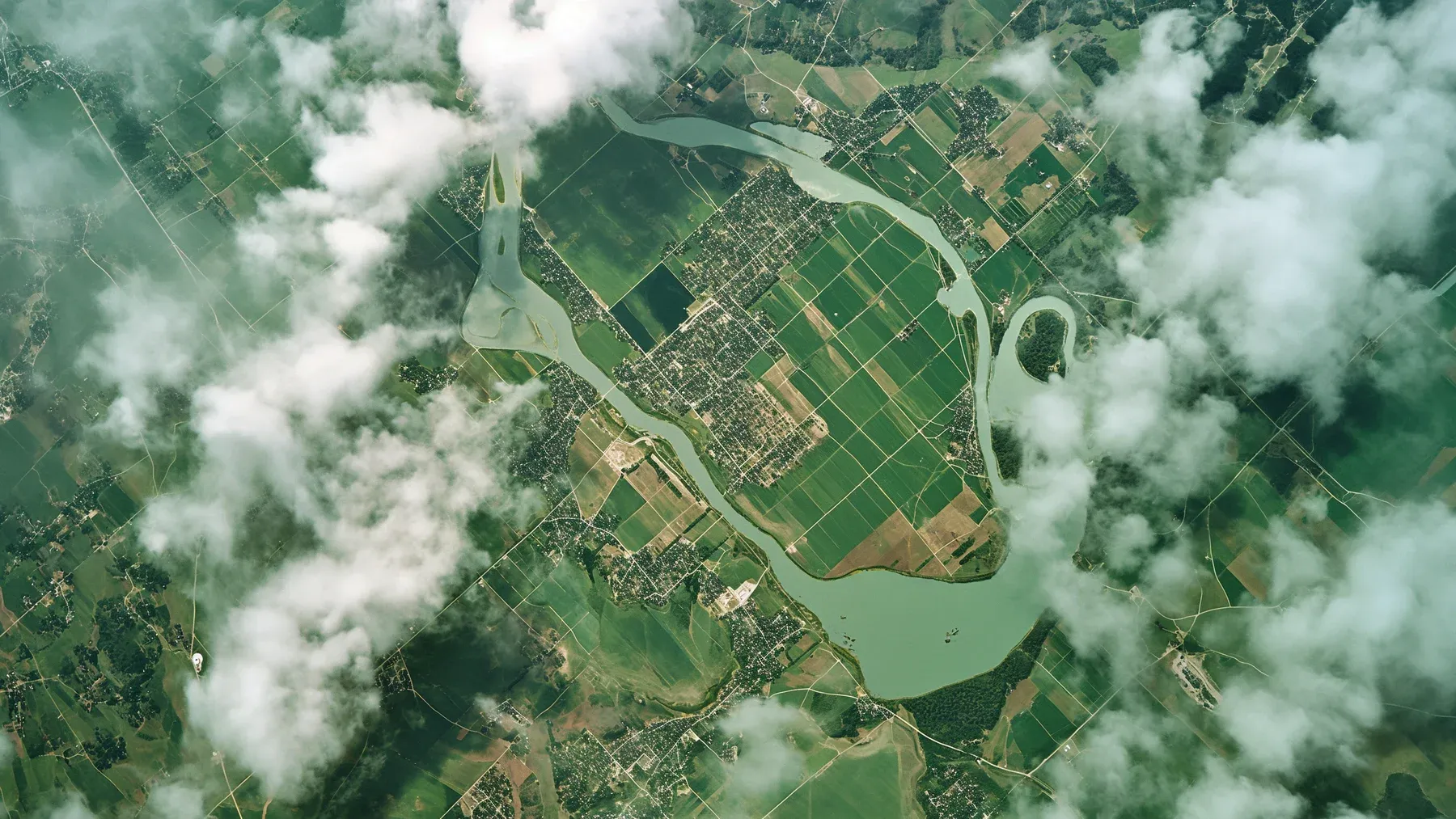
A fantasy dialect is a regional or social variety of a shared language. Its speakers use recognizable differences in vocabulary, grammar, pronunciation, or conversational habits, while retaining enough common structure to communicate. That definition matters because a dialect is not an incomplete language. David J. Peterson notes in The Art of Language Invention that everyone speaks a dialect and that prestige differences come from social history, not from one variety functioning better than another.
For a novelist, the practical question is smaller than building several complete languages. How do you create fantasy dialects? Begin with one shared language, choose a few features that vary across communities, draw a separate boundary for each feature, and decide how travel, education, trade, and status affect comprehension. Then show only the differences a reader needs for character, conflict, or setting.
Consider a courier who carries sealed orders along a river. The route begins in upland farming villages, passes through a central market city, and ends at a coastal port. People along the route share a language. They do not divide neatly into three speech blocks. The upland word for a small boat reaches halfway toward the city. A coastal plural ending follows merchant traffic farther inland. The city’s formal negative particle appears in schools and official notices, yet market workers use a local alternative at home. The courier understands more varieties than a city clerk because the courier hears them every week.
This continuous case will guide the method. The goal is to make the language feel distributed through human contact, then use that distribution when a scene turns on belonging, authority, misunderstanding, or trust.
Draw each feature on its own map
Writers often begin by coloring one dialect region for every kingdom. That creates a clean reference map, but it hides the most useful part of dialect design. Individual features travel by different routes. A word used by boat crews can spread from port to port. A grammatical form taught in schools may follow administrative districts. A pronunciation can remain local because it is acquired in childhood and rarely taught. A religious expression can cross several political borders through pilgrimage.
Dialectologists call a boundary between two forms an isogloss. The University of Sheffield describes isoglosses as lines showing where one variant gives way to another. Several overlapping lines may indicate a major dialect boundary, but each line still represents one feature. In The Language Construction Kit, Mark Rosenfelder demonstrates why the lines must remain separate: isoglosses for different words can produce strikingly different maps.
Start with four to six features that a character might actually notice. Spread them across different levels of language so the dialect does not depend on an exaggerated accent.
| Feature | Upland tendency | Market-city tendency | Coastal tendency | Likely route of spread |
|---|---|---|---|---|
| word for a narrow ferryboat | reed boat | both forms | channel boat | boat crews and river trade |
| ordinary plural ending | -en | -en or -s | -s | merchant contact |
| formal negative particle | local form | school standard | school standard | clerks and schooling |
| greeting to an older stranger | kinship title | civic title | trade title | local status systems |
| one vowel in river place names | upland sound | mixed | coastal sound | childhood speech and migration |
The table is a design inventory, not dialogue ready for publication. Give every row a carrier. If the coastal plural reaches the market city, identify the people who brought it: seasonal deckhands, merchant families, naval recruits, or children raised between the port and city. If the upland greeting stops near a gorge, decide whether travel drops there or whether another institution competes with it.
Now draw each row separately. The boat-word line may hug the navigable river. The plural line may reach inland along a caravan road. The school form may cover the entire kingdom on paper while remaining uncommon in casual speech. Where three or four lines cluster, naming a dialect region becomes useful. Where they separate, preserve the mixed zone. A village can share upland grammar, city vocabulary, and coastal pronunciation without being inconsistent.
This article concerns present-day variation. If you need to derive the shared forms through centuries of ordered changes, use the earlier guide to building history into a fictional language. If the visible words still need sound rules and readable spelling, the method for inventing pronounceable fantasy words handles phonotactics, stress, and orthography. Keeping those jobs separate prevents the dialect map from becoming a second language-history project.

Let neighboring speech blend into a continuum
A dialect continuum is a chain of related varieties in which neighboring communities understand one another more easily than distant communities do. The courier’s route can therefore change gradually. Every stop differs a little from the last. A speaker from the upland end may struggle at the coast even though no single village marks the point where one language suddenly became another.
Build that gradient with a route ledger. List the communities in travel order. For each pair of neighbors, record contact frequency, travel time, barriers, shared institutions, and unfamiliar features. You can estimate a practical distance without inventing percentages:
- Easy: differences are noticeable, but repair is rare.
- Workable: speakers repeat words, slow down, or replace a local term.
- Costly: ordinary conversation requires sustained accommodation.
- Specialist: an interpreter or experienced traveler is needed for precision.
The labels describe a scene burden rather than a scientific measurement. They tell you how much effort communication consumes and what kind of mistake remains plausible. A treaty negotiation demands a higher threshold than buying bread. Two speakers may manage routine trade while missing sarcasm, legal scope, kinship implications, or indirect refusal.
Do not calculate comprehension from linguistic distance alone. A large peer-reviewed study by Charlotte Gooskens and Francisca Swarte found that exposure was the strongest extra-linguistic predictor of mutual intelligibility among the Germanic languages they tested. Lexical, orthographic, and phonetic distance also mattered. For fiction, that means the courier can understand the coast better than a city clerk does even if both grew up speaking the same city variety. Repeated listening has trained the courier to predict unfamiliar forms.
Exposure can also make understanding asymmetric. University of Groningen researchers found that Danish speakers in their study understood spoken Swedish better than Swedish speakers understood spoken Danish, while the written forms showed little asymmetry. Your world can use the same principle without copying those languages. Upland workers may hear the city standard through tax collectors, songs, and courts, while city officials rarely hear upland speech. The workers understand the officials well. The officials misjudge the workers as unintelligible.
Make an exposure matrix for the recurring cast. Put speakers in rows and varieties in columns. Fill each cell with the source of familiarity: childhood, spouse, military service, schooling, trade, worship, theater, or none. This produces character-specific comprehension instead of a universal rule that everybody from one region understands the same amount.
For the river courier, the matrix explains a useful reversal. At an official checkpoint, the city clerk owns the prestigious form but cannot follow an upland witness. The courier lacks rank yet can interpret. Language ability changes who controls the scene, whose version enters the record, and whether the courier risks correcting an official.
Prestige changes who adapts to whom
A standard variety is usually a dialect selected and maintained by institutions. Courts, schools, printers, temples, broadcasters, and bureaucracies can give one form wider reach. That reach does not make the form older, purer, or more logical. Rosenfelder cautions that a cultural center may change quickly because it receives constant contact, while an isolated region can preserve older features. Peterson likewise treats every dialect as a complete linguistic system.
Separate three things in your notes:
- Local variety: the forms a community uses in ordinary interaction.
- Institutional standard: the variety expected in documents, schools, or official speech.
- Register: the language choices a speaker makes for a particular audience and situation.
These layers overlap, but they answer different questions. The market city can supply the written standard while city residents still use neighborhood vocabulary at home. An upland advocate may command the standard perfectly in court and return to local grammar with family. A coastal merchant can use a trade register shared across several dialect regions. None of them changes into a different person when the register changes. Each is selecting from a larger repertoire.
Prestige becomes dramatically useful when accommodation carries a cost. The river courier uses the clerk’s standard to appear competent, then repeats the witness’s words in a form the clerk accepts. If the courier translates too smoothly, the witness’s anger may disappear. If the courier preserves a local insult, the clerk may treat it as insubordination. If the clerk understands but pretends not to, dialect prejudice becomes an action rather than a paragraph of lore.
Avoid attaching intelligence, virtue, or danger to sound alone. The University of Sheffield’s dialectology overview explains that listeners often judge varieties through beliefs about the people and places associated with them. A harsh verdict about an accent can reveal the listener’s class assumptions, political loyalty, or ignorance. The dialect itself does not prove the stereotype.
This is also why every recurring speaker needs a social history. Birthplace is only the first variable. Add movement, education, work, family, age, ambition, and audience. A sailor raised upriver may use coastal ship terms. A court-trained child of migrants may speak the standard while understanding a home variety they refuse to use in public. A retired soldier may carry barracks slang across regions that otherwise share few features. The result feels social because every choice comes from contact and consequence.
Put the dialect on the page with a light hand
The design can be detailed while the prose remains easy to read. Readers usually need two or three recurring signals for a viewpoint character or community. Prefer signals that survive ordinary spelling: vocabulary, word order, sentence length, forms of address, conventional metaphors, question patterns, and discourse particles. Phonetic spelling asks the reader to decode every line and can turn a speaker into a caricature.
Reedsy editors recommend a restrained approach to written dialect because repeated sound substitutions slow reading and must be applied consistently. A useful rendering plan for the courier scene could be:
- The upland witness uses the kinship title for an older stranger, keeps the -en plural, and places the negative particle before the subject.
- The city clerk uses the civic title, school-standard grammar, and administrative nouns.
- The courier begins in the standard, repeats one upland form to establish trust, then paraphrases only when precision requires it.
That is enough for three distinct voices. You do not need to respell every vowel. If one pronunciation affects a rhyme, name, password, or misunderstanding, establish it in narration or use it once in a context the reader can solve.
Test each marked feature for work. Ask what the line would lose if rendered in the shared standard. Keep a difference when it reveals affiliation, changes interpretation, influences status, or creates a later payoff. Remove it when it merely reminds the reader that an accent exists. The same discipline used to write dialogue with conflict and subtext applies here: speech should alter the exchange.
Then perform a cold reading pass. Highlight every marked dialect feature on two consecutive pages. If the marks dominate the dialogue, reduce them. Read the passage aloud to catch forced syntax and accidental inconsistency. Give it to a reader who has not seen the dialect notes. Ask who appears to hold authority, where communication became harder, and which differences they remember. A successful passage communicates those effects without requiring a glossary.

Build a dialect atlas inside NovelOS Studio
Once dialect differences affect maps, institutions, characters, and scenes, a loose vocabulary document becomes hard to trust. The same feature may appear in a place name, a witness statement, a school rule, and a chapter written months later. NovelOS Studio gives the dialect system a home beside the novel it changes.
Build the atlas from the river route outward:
- Create the shared language and its major varieties as Lore entries in The Architect. Use properties for the feature inventory, including variant, distribution, register, carrier, and a short example. The Lore Chronicle can hold migrations, school reforms, trade expansions, and other events that explain the present map.
- Create the upland communities, market city, port, roads, schools, courts, and trading institutions in Cast & World. Connections can link a dialect entry to the locations, groups, characters, scenes, and manuscript chapters where it matters.
- Record each speaker’s birthplace, movements, education, work, affiliations, and language habits in The Oracle. Those fields explain the exposure matrix and prevent every character from inheriting one uniform regional voice.
- Keep separate feature maps, route sketches, phrase experiments, audio references, and field notes on Spark boards. Spark remains the exploratory surface while the accepted rule belongs in the relevant Lore entry.
- Put every scene with accommodation, translation, code choice, or language-based risk onto Blueprint Scene Cards. The card can keep point of view, characters, locations, items, synopsis, and timing together. Timeline View shows whether readers encounter a feature before a later misunderstanding or payoff depends on it.
- Draft the actual exchange in Manuscript. During revision, search for each marked term and compare its speaker, audience, and context with the atlas. Alchemist can propose alternatives for a selected passage while leaving the original visible, so the writer decides whether a smoother sentence still belongs to that voice.
- Add a dialect revision target to Progress & Goals. One pass can audit feature consistency, another can reduce decoding friction, and a final pass can verify that every misunderstanding changes the scene rather than decorating it.
Finish with two audits. First, trace each visible feature back to a place, community, or institution that could spread it. Second, trace each recurring speaker across the map and confirm what they have actually heard. The first audit protects the world model. The second protects character voice.
A convincing dialect map is a network of partial overlaps. Boat vocabulary follows crews, school grammar follows institutions, pronunciation follows childhood and migration, and comprehension follows exposure. Those paths give a novelist more than linguistic texture. They decide who belongs, who must adapt, who is underestimated, and who can carry meaning across a boundary. NovelOS Studio keeps the routes, varieties, speakers, and scenes connected in one local-first project, so the dialect system continues to serve the story from worldbuilding through the final manuscript.
Sources and further reading
- University of Sheffield, “How is Dialectology studied?”
- Charlotte Gooskens and Francisca Swarte, “Linguistic and extra-linguistic predictors of mutual intelligibility between Germanic languages”
- Felicity Frinsel, Anne Kingma, Femke Swarte, and Charlotte Gooskens, “Predicting the asymmetric intelligibility between spoken Danish and Swedish using conditional entropy”
- Reedsy Live, “Writing Dialogue That Pops off the Page”
- David J. Peterson, The Art of Language Invention: dialect, idiolect, prestige, and the equal linguistic status of dialects.
- Mark Rosenfelder, The Language Construction Kit: regional variation, dialect design, local vocabulary, prestige standards, and isoglosses.