Descriptive Story Openings That Hook Readers by Making Details Matter
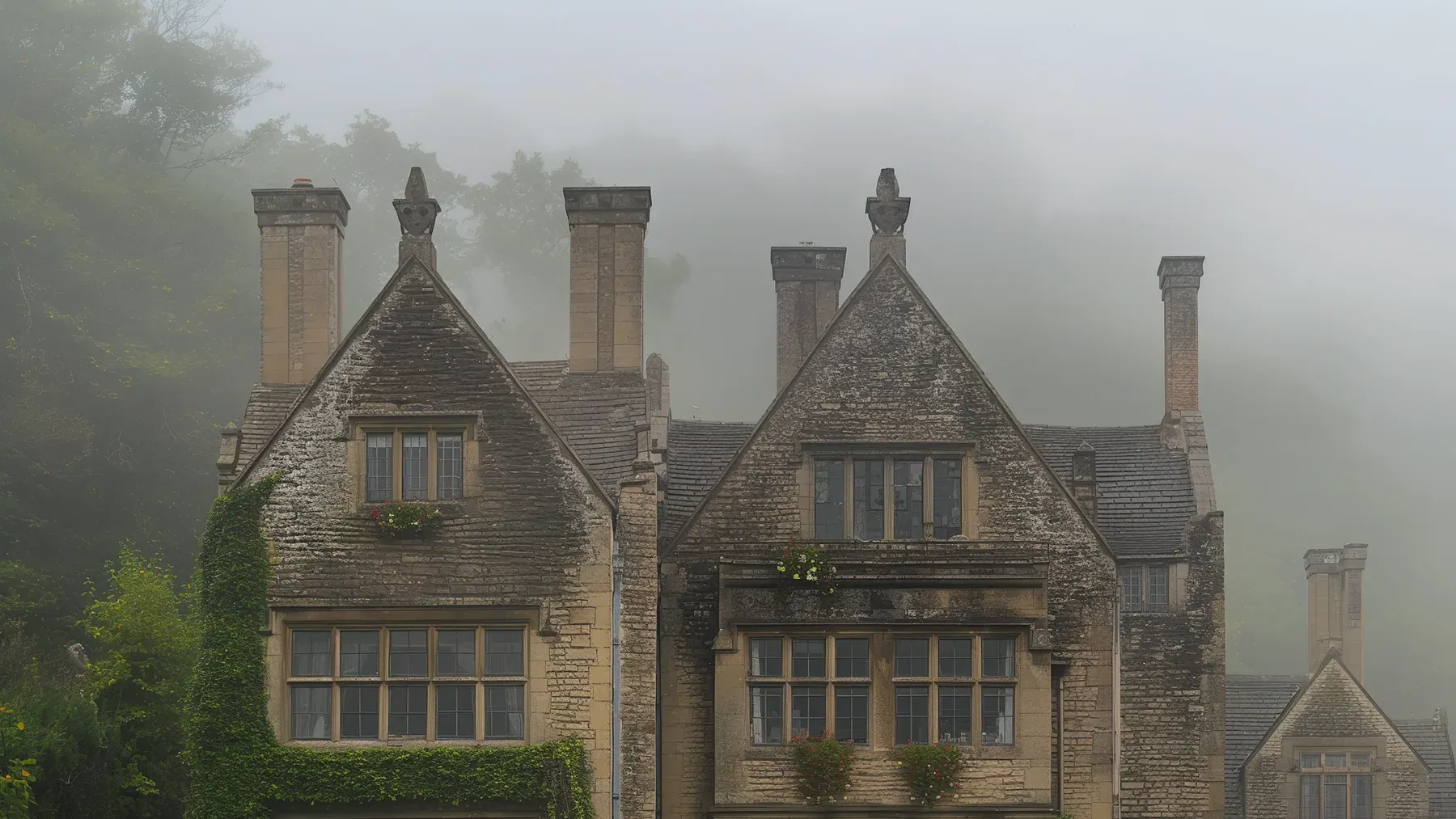
A descriptive story opening hooks readers when the first details behave like evidence. The prose establishes what the viewpoint character expects, reveals one feature that does not fit, and lets that discrepancy change the character’s next decision. Physical action can remain quiet because interpretation is already moving.
Consider a probate surveyor sent to inventory a house after its owner dies. She has the county plan, two insurance photographs, and dozens of drawings made by her late mother. The records all show two chimneys. From the road, the house has three.
The third chimney is plain stone. It does not glow, whisper, or release a flock of ravens. Its power comes from the evidence around it. The surveyor knows what should be there, has a professional reason to count accurately, and has a private reason to distrust her mother’s drawings. She came expecting to prove that her mother embellished this place. Instead, the building appears to confirm the one detail everyone dismissed.
That is the essential movement of a description hook:
- Establish a credible expectation.
- Select a detail that violates or complicates it.
- Let the viewpoint character infer what the detail might mean.
- Make that inference alter the character’s behavior.
- Answer enough of the first question to earn a larger one.
This approach differs from opening with generic atmosphere. A misty lane and a decaying house can create mood without directing the reader’s curiosity. The extra chimney gives the surveyor something to test. It also promises the kind of reading experience ahead: attention to place, family memory, concealed history, and conclusions that may need revision.
Establish the Baseline Before the Strange Detail
A discrepancy only works when readers understand what makes it discrepant. Three chimneys are ordinary on many houses. The county plan, photographs, and maternal drawings turn the number into a problem. Without that baseline, the detail may be vivid while carrying no narrative pressure.
You rarely need a paragraph of explanation before the hook. Put expectation and violation close together: Her mother’s drawings gave the house two chimneys. The roof had three. The first sentence supplies the measuring standard. The second breaks it. The reader can now ask a specific question rather than receiving a vague instruction to feel uneasy.
Expectations can come from several sources:
- Physical rules: the locked greenhouse contains fresh footprints despite an unbroken blanket of snow.
- Routine: the village bells stop at the hour when they have rung for three centuries.
- Expertise: a conservator sees modern pigment beneath an authenticated medieval face.
- Memory: a returning soldier finds every familiar name on the memorial except the one she came to touch.
- Social convention: guests at a wedding avoid the only chair decorated for an honored relative.
- Personal desire: a tenant desperate to believe the building is safe notices that every smoke alarm has been removed.
The baseline should belong to the story, rather than being manufactured only to make an object peculiar. If the opening emphasizes the third chimney and the novel never returns to the house, hidden construction, family history, or unreliable records, the page has promised a different book. Mary Buckham’s discussion of evocative description makes relevance central: a setting hook gains force when the place is specific to the conflict and the story continues using what the opening teaches readers to notice.
The surveyor’s professional objective makes the house relevant before she leaves the car. She must document additions, locate unsafe structures, and produce an inventory the estate can defend. Her private objective complicates that work. She wants the records to defeat her mother’s stories because accepting them would force her to reconsider years of resentment. The chimney now presses on task and identity at once. One contradiction gives the reader room to think. The next detail should test it: she compares the roofline with the plan, walks to the east wall, and finds no room beneath the extra stack.
If your current opening offers a catalogue, identify the character’s measuring standard. “The hall contained twelve portraits” becomes active when the family register lists eleven heirs. “The lake was perfectly still” gains meaning when the character knows the dam opened an hour ago. Description starts a story when perception encounters an expectation the scene can challenge.
Turn Observation Into an Evidence Chain
The first image attracts attention. The evidence chain keeps it. Each new observation should change the best available explanation and give the character a reason to continue.
At first, the surveyor considers a clerical error. She checks the date on the county plan. Then she suspects a later addition, although the stonework is older than the other stacks. She walks the exterior wall and finds no fireplace, furnace flue, or interior room aligned beneath it. When she asks the caretaker which room contains the third fireplace, he answers, “You counted from the road?”
That reply does not solve the mystery. It does something more useful: it proves that counting has social consequences. The caretaker expected visitors to overlook the chimney, and he wants to know where the surveyor stood when she saw it. The descriptive hook has moved through setting, inference, action, and relationship.
A practical evidence chain has five parts:
| Beat | Question for the writer | House example |
|---|---|---|
| Baseline | What does the observer reasonably expect? | Plans and drawings show two chimneys. |
| Charged detail | What precise fact does not fit? | The roof visibly has three. |
| Inference | What explanation does the observer prefer? | A renovation was omitted from the record. |
| Verification | What can the observer do to test it? | Trace the exterior wall and compare the floor plan. |
| Partial payoff | What answer closes one possibility and opens another? | The stack is real, old, and unsupported by any recorded room. |

Inference matters because raw description does not interpret itself. The surveyor notices mortar color, roof load, and the absence of a flue because her work has trained her attention. A child raised in the house might notice that adults always stopped counting at two. A local historian might recognize stone taken from a demolished chapel. These are different hooks built from the same object because viewpoint determines which evidence becomes legible.
Keep observation and conclusion distinct in your own planning, even when the prose blends them. The stack leaned toward the nursery is observable. Someone had built it to watch the nursery is an inference. A close viewpoint can state the second thought with conviction while the author remains aware of its status. That distinction lets later discoveries correct the character without making the original description dishonest.
This is closely related to active setting, where place affects movement, risk, and choice. The narrower challenge here is the first page: give readers enough spatial truth to participate in the character’s reasoning. If the east wall has no room beneath the chimney, orient us to that wall. If a sealed stair later matters, establish where the corridor should end. Mystery becomes satisfying when readers can revise a model.
Sensory detail can extend the chain when it provides evidence unavailable to sight. The surveyor hears rain strike a hollow shaft between two bedrooms. Coal dust appears inside an electrically heated house. A patch of plaster remains warm after every fireplace has gone cold. Choose the sense that tests the current explanation. Cycling through sight, smell, sound, touch, and taste by habit will slow the investigation and weaken the hierarchy of clues. The article on sensory detail without overwriting offers a fuller method for selecting only the senses that change the scene.
Use Sentence Shape to Set the Reading Speed
Evocative description is often slower than an action hook, and that is useful when the pace matches the story’s promise. Ron Rozelle argues that opening description establishes mood and tone through carefully selected language. Mary Buckham likewise notes that voice and word construction can make readers slow down and attend. The goal is deliberate attention, rather than delay for its own sake.
Begin with enough sentence space to form an image. Then shorten or sharpen the syntax when the detail alters understanding:
The house stood beyond a flooded meadow, its roof dark with rain and its windows reflecting a sky the color of old pewter. Her mother’s drawings gave it two chimneys. The roof had three.
The longer first sentence controls arrival. The next sentence introduces the private record. The short final statement performs the contradiction. If every sentence were clipped, the passage would announce urgency before the surveyor knows what is wrong. If every sentence remained expansive, the recognition could dissolve into scenery.
Word choice should also reveal the observer. A surveyor may think in load, alignment, material, alteration, and access. She would not describe every gable as “haunted” unless that judgment belongs to her voice. Technical vocabulary becomes characterization when readers can understand its implication from context: the third stack has weight, although the plan shows no wall capable of carrying it.
Avoid adjectives that merely announce the intended reaction. An eerie, sinister chimney loomed ominously gives three instructions and little evidence. A concrete inconsistency lets readers experience the reaction: lichen covers every exposed stone except the ones facing the house. The detail raises possibilities. Was that side recently cleaned, previously enclosed, or protected by something no longer present?
The same principle prevents lyrical description from sounding detached from the novel. A comparison should arise from the narrator’s or character’s available world. The surveyor might think the stack resembles an erased measurement returning through paper because she has spent years reading altered plans. A sailor, priest, or child would reach for a different comparison. Voice hooks readers when it demonstrates a mind encountering the world, rather than a writer decorating it from above.
Pay the First Question Before Curiosity Expires
Description creates curiosity, although curiosity weakens when a story protects every answer. The surveyor should learn something about the chimney during the opening scene. Perhaps she reaches the attic and discovers that the masonry descends through the house, yet every floor has been framed around an empty square. On the ground floor, newer paneling covers the place where an opening should be.
That is a partial payoff. It answers whether she miscounted and whether the chimney is decorative. It replaces those questions with stronger ones: what occupied the vertical space, why was it sealed, and why did her mother draw the altered version as though it were original?
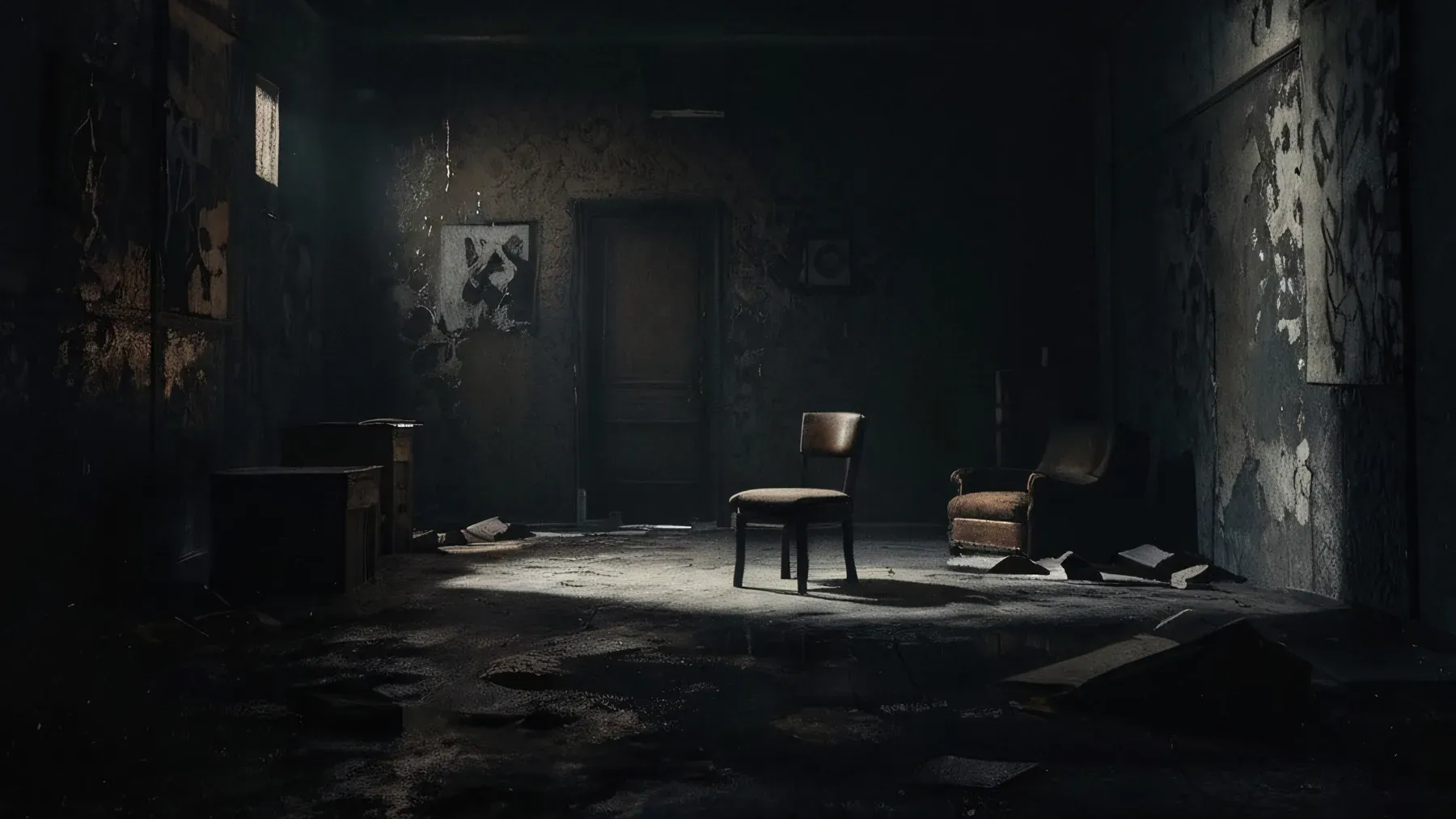
The answer also needs a consequence. The surveyor can no longer complete the inventory from the existing plan. She must disclose an unrecorded structure, delay the estate, and admit that her mother’s drawing contained information the official record concealed. The hook now belongs to plot because the new fact changes obligation.
This movement protects the article’s method from becoming a trick. A strange image followed by twenty pages of avoidance feels like bait. An image that produces investigation, partial knowledge, and a harder decision earns continued attention. It follows the same trust principle used by an opening hook without immediate action: readers continue because the story keeps transforming the initial question, rather than because the author refuses to discuss it.
You can diagnose a stalled descriptive opening by tracing verbs. If the character only sees, notices, remembers, and wonders, the passage may remain contemplative after it has generated a reason to act. Add a test that fits the character: measure, compare, touch, call, conceal, enter, photograph, ask, or leave. The important part is causality. The observation changes the plan.
Do not force danger when another consequence fits better. A domestic novel might use a second toothbrush to change a reunion. A historical novel might use the wrong fabric in a mourning dress to expose an alliance. A romance might use a carefully repaired object to overturn an assumption about who left. The hook’s scale should match the story. Its result is a character forced to abandon the understanding that guided their arrival.
Revise the Description as Part of the Whole Novel
A strong first page can still damage a novel if its mystery, voice, or level of detail disappears afterward. Revise the opening beside the scenes that develop and answer it. Confirm that the chimney’s physical facts remain stable, the surveyor’s knowledge changes in order, and later discoveries reinterpret details readers actually received.
This is where NovelOS Studio turns a promising image into a story system:
- Cast & World records the surveyor’s professional expertise, private history, habitual attention, and false assumption, so the description belongs to her rather than to a neutral camera.
- The Architect preserves the house plan, construction phases, materials, sealed spaces, property records, and the difference between established fact, rumor, and character inference.
- The Blueprint gives the opening Scene Card a baseline, charged detail, preferred explanation, verification action, partial answer, and resulting choice. Timeline View keeps renovations, the owner’s death, the mother’s visits, and the present inspection in a coherent order.
- Connections tracks who knows about the chimney, who benefits from the altered record, and how each relationship changes when the surveyor asks the wrong question.
- Spark Ideation lets you test several story-specific discrepancies before choosing the one that activates the central conflict. An extra chimney, missing room, or warm wall can imply very different books.
- The Manuscript is where you draft beyond the polished first sentence. Carry each candidate opening through orientation, investigation, and choice to learn which version can sustain a scene.
- The Alchemist supports a focused revision pass for adjective clusters, generic atmosphere, redundant emotional explanation, filtering habits, and details that never influence a later decision.
During revision, ask five questions in order. What does the character expect? Which exact detail changes that expectation? What inference does the character make because of knowledge, desire, or bias? What action tests the inference? What answer changes the next choice? If one link is missing, repair that link before adding more imagery.
Then inspect the promise made by the page. Does the novel continue rewarding close attention to setting? Does family memory remain relevant? Will records and physical evidence disagree in meaningful ways? An opening need not summarize the whole plot. It should teach readers how this book creates significance.
A descriptive story opening does not need to shout. It needs to make one detail impossible for this character to ignore. Establish the expected world, place the contrary fact inside it, and allow perception to become inference, action, and payment. In NovelOS Studio, you can keep that first charged detail connected to the character who notices it, the world that explains it, and the later scenes that fulfill its promise. The house may remain silent, yet the story has already begun.
Sources and Further Reading
- Mary Buckham, Writing Active Hooks Book 2: Evocative Description, Character, Dialogue, Foreshadowing and Where to Use Hooks.
- Ron Rozelle, Description & Setting: Techniques and Exercises for Crafting a Believable World of People, Places, and Events.