The Prayer Still Comes: Building a Crisis-of-Faith Character Arc

For nineteen years, the abbey’s archivist has spoken the dawn liturgy from memory. On the morning after the valley mine collapses, he reaches the line about mercy and falls silent.
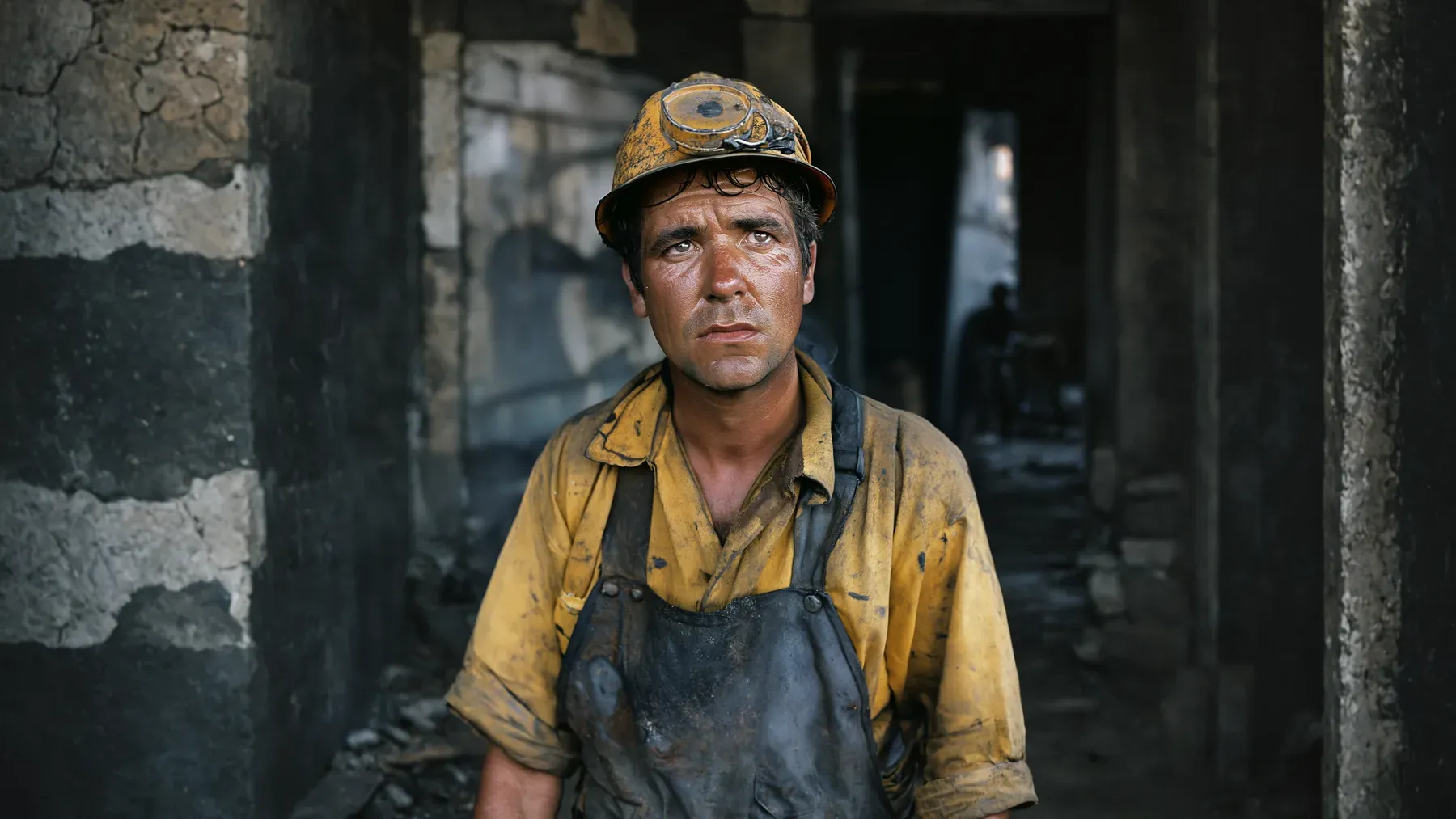
Thirty-two workers are trapped below ground. The abbey owns the mine. Months earlier, the archivist found reports about cracked supports and obeyed the prior’s order to wait for an official inspection. He still knows the prayer. He still wants the workers to hear the noon bell through an old ventilation shaft. What he cannot determine is whether his obedience served faith, fear, or the institution that gave him a home.
A believable crisis of faith changes more than an opinion. Belief may organize conscience, purpose, time, family, authority, burial, food, work, and the words a person uses for suffering. Doubt can disturb one of those layers while leaving others intact. A character may distrust a leader and continue praying, reject a doctrine and keep a ritual, feel abandoned by the divine and defend the community, or leave an institution while carrying its moral language for life.
The writer’s job is to locate the rupture, make its consequences material, and force the character to act before every spiritual question is settled.
Locate the Rupture Instead of Declaring Lost Faith
Research on religious and spiritual struggle describes several distinct domains. A person can struggle with the divine, perceived evil, moral failure, doubt, ultimate meaning, or religious people and institutions. These domains interact, though they should not be collapsed into “the character no longer believes.”
Start with a six-part rupture map:
| Domain under pressure | The question inside it | Evidence that would intensify it |
|---|---|---|
| Divine relationship | Was I abandoned, punished, unheard, or deceived about the sacred? | Prayer seems unanswered or an expected sign never comes |
| Doctrine | Is a specific teaching true, coherent, or interpreted honestly? | Text, experience, history, or another teacher challenges it |
| Conscience | Did I violate the values I claimed to serve? | The character acted, failed to prevent harm, or stayed silent |
| Ultimate meaning | What makes suffering, service, or life worth anything now? | The old explanation fails during irreversible loss |
| Authority | Can this leader or institution still interpret the tradition credibly? | Concealment, hypocrisy, abuse, or self-protection becomes visible |
| Belonging | Who am I if my community changes its judgment of me? | Questions threaten housing, family, vocation, status, or safety |
The mine collapse first breaks the archivist’s trust in authority and conscience. He participated in silence that may have helped conceal danger. His question about mercy emerges through that moral fracture, yet it does not instantly settle whether the divine exists or whether the entire tradition is false.
Write the opening doubt at the scale of the trigger. “Why does suffering exist?” is too large for his first morning. A sharper question is: If my vow of obedience helped preserve a danger, what did obedience require of me? Later discoveries can widen it. The prior may have feared that closing the mine would leave the valley without winter food. Now the archivist must examine who was protected, whose risk was accepted, and who received the power to decide.
This distinction also keeps moral injury from becoming decorative anguish. Moral injury is studied as distress following a violation of deeply held moral commitments, including acts someone committed, witnessed, failed to prevent, or experienced as betrayal by legitimate authority. The archivist has both self-directed guilt and institutional betrayal. Each demands different evidence and a different possible repair.
A character misbelief may sit inside this crisis without defining the religion itself. The archivist’s private rule could be “obedience makes an action righteous.” His tradition may contain older teachings about conscience, protest, lament, and the limits of authority. Discovering that internal disagreement can produce a deeper crisis than simply learning he was taught a lie.
Reconstruct What Belief Did Before It Failed
The reader needs to understand why this faith had authority. David Corbett’s The Art of Character urges writers to examine how religion shapes a character’s conscience, purpose, daily action, community, view of death, and sense of the world. That approach turns belief into lived character rather than an abstract position.
Build the pre-crisis faith through four records.
First, record formation. Who taught the character? Which experience made the teaching credible? The archivist entered the abbey as an orphan during a famine. Its members fed him, taught him to read, and showed him a life in which preserving knowledge counted as service. His loyalty grew from received care as well as doctrine.
Second, record practice. Identify what happens daily, weekly, seasonally, and at thresholds such as birth, adulthood, illness, marriage, or death. The archivist wakes to bells, copies names into burial books, eats in community, teaches children, tends a memorial lamp, and reads weather records to farmers. These actions reveal what his faith does in the valley.
Third, record interpretive authority. Who decides what a vow means? Is authority held by a text, elder, council, household, scholar, revelation, ancestor, personal conscience, or combination? The abbey’s prior can issue orders, but an old council rule may require public testimony when abbey property threatens life. The crisis becomes a dispute with sources, procedures, and consequences.
Fourth, record material dependence. Faith communities can supply housing, food, education, employment, kinship, legal status, protection, medical care, and burial. If the archivist challenges the abbey, he may lose his vocation and home. The miners’ families may lose wages and winter stores if the mine closes. Those costs prevent spiritual choice from floating above ordinary survival.
Show benefits and harms with comparable specificity. The abbey preserved the valley’s language through an occupation, sheltered children, and maintained rescue maps. Its leaders also hid maintenance warnings and treated workers as an acceptable risk. A setting becomes morally complex when the same institution has a credible history of service and a current mechanism of failure.
The existing guide to worldbuilding that affects story can help connect doctrine with law, labor, class, education, and geography. Research the actual tradition, region, and historical period if you are representing a real faith. Sacred words, offices, arguments, and practices are never interchangeable decorations.
Treat Doubt as Competing Interpretations
A crisis of faith can become an essay when the protagonist only thinks and supporting characters arrive to state positions. Give the character rival explanations that predict different actions.
The archivist might consider four interpretations of the collapse:
- The prior made a tragic but defensible choice to protect the valley’s economy.
- The abbey confused its survival with sacred duty and corrupted the vow of obedience.
- The archivist knew enough to resist and now uses theology to avoid naming his cowardice.
- The tradition contains resources for truth and repair, but its present leaders have abandoned them.
Each interpretation needs a test. The first predicts that the prior sought independent advice and prepared emergency measures. The second predicts a pattern of suppressed warnings and protected revenue. The third predicts moments when the archivist concealed evidence even without a direct order. The fourth predicts neglected texts, dissenting predecessors, or procedures the institution chose to ignore.
This method lets new information change the crisis. A hidden repair ledger strengthens the corruption hypothesis. A letter showing the prior requested grain relief complicates his motive. A marginal note in the archivist’s own hand proves that he understood the danger earlier than he admits. Evidence redistributes responsibility without supplying a simple theological answer.
Supporting characters should hold complete lives rather than serve as voting tokens. A miner’s widow remains devout and resents the archivist for assuming grief must lead to his doubt. A younger member sees questioning as a form of fidelity. The rescue foreman wants the old tunnel maps and has no patience for the abbey’s internal theology. The prior sincerely fears communal collapse while protecting his office.
Give each person a different stake and source of knowledge. The widow knows how the abbey cared for families during the last flood. The younger member has studied an older rule on public accountability. The foreman understands which map can save lives. The prior knows what winter debt will do to the valley. Their positions can cross, combine, and change because none exists solely to persuade the protagonist.
Make Practice and Relationship Carry the Change
Belief becomes dramatic when routine changes. Instead of repeatedly stating that prayer feels empty, alter what the character does before, during, and after prayer.
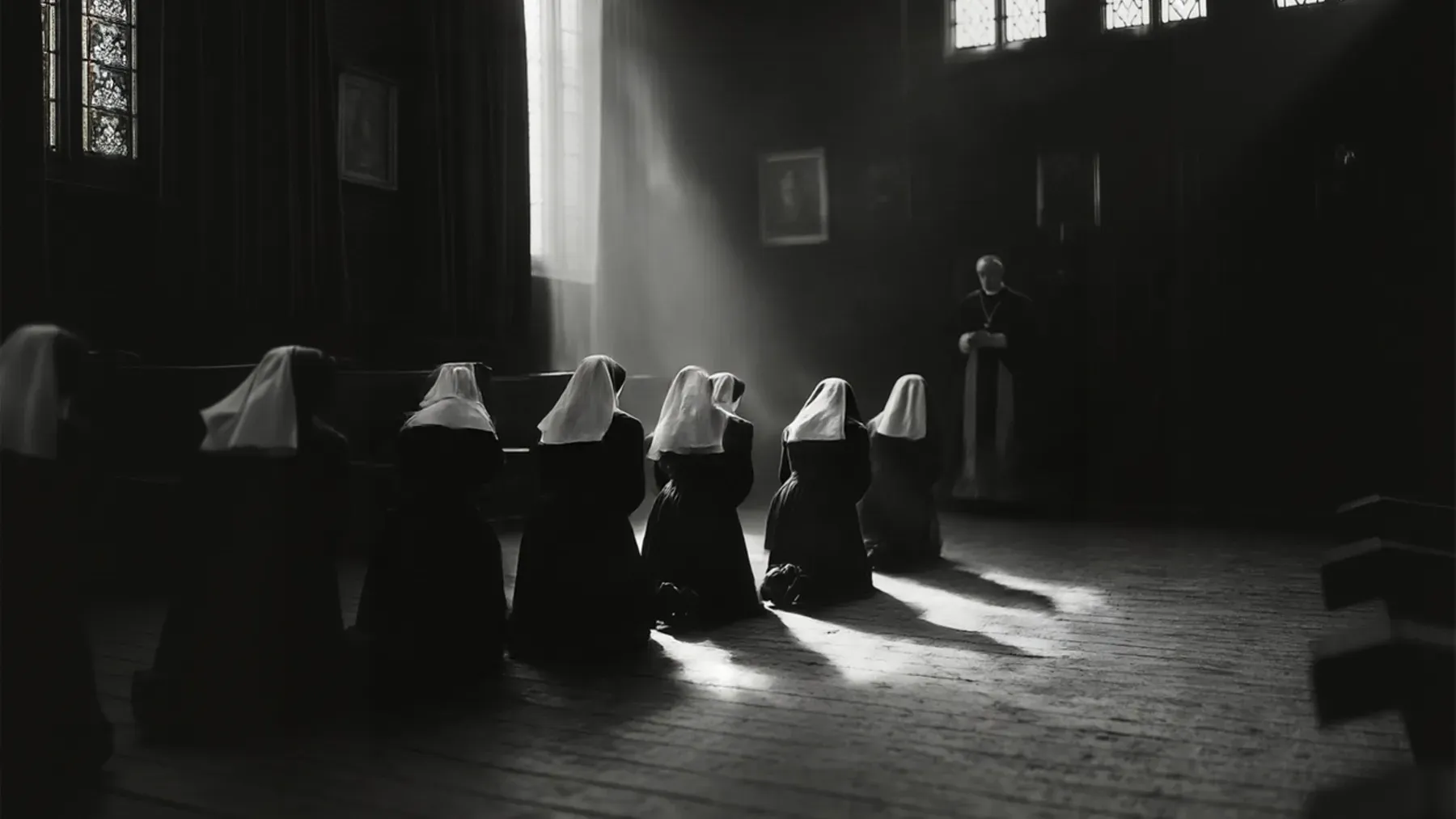
At dawn, the archivist stops at one line and lets another member continue. At noon, he rings the bell because miners may hear it underground. At dusk, he refuses the mine owner’s request to call the collapse providential. The same ritual object serves silence, practical hope, communal time, and political pressure.
Track changes across three passes:
- Continuation: which practice survives almost automatically? He washes the memorial lamp and records every trapped worker’s name.
- Refusal: which act has become morally impossible? He will not lead a public prayer that asks families to accept secrecy.
- Revision: which practice acquires a new purpose? He reads the names aloud during the council meeting, turning a burial custom into testimony for people still alive.
Relationships make those changes costly. If the prior taught him to read, disobedience contains gratitude and anger. If a fellow member once protected him from punishment, that friend may experience disclosure as personal betrayal. If villagers rely on the abbey school, exposing leadership threatens people the archivist hoped to serve.
Avoid assigning one reaction to the whole community. Some members suppress doubt, some seek growth through it, some separate institutional loyalty from spiritual commitment, and some leave. Longitudinal research on religious doubt has found different consequences for negative congregational interactions, spiritual support, suppressing questions, and seeking growth. The study is specific to its sample, but the craft lesson travels: response depends on relationships and available ways to process doubt.
Silence also needs a defined meaning. The archivist may stop a prayer because speaking would feel dishonest. Later he may keep the same silence to listen for rescue signals. Months afterward, silence may become an accepted form of lament. Repetition with a changed function gives the arc continuity.
Force a Costly Action Before Certainty Arrives
The trapped workers need an old tunnel plan kept under the abbey seal. Releasing it will reveal inspection notes and prove that leaders knew about the supports. The prior refuses permission because an uncontrolled rescue could cause a second collapse and public disclosure could destroy the institution. The archivist must choose without knowing whether the map is current, whether the workers live, or what he finally believes.
This is the story’s hinge. The question is no longer “Will he recover his faith?” It is “Which source of moral authority will govern his action now?”
Build the decision through a responsibility ledger:
| Responsibility | What action honors it | What that action risks |
|---|---|---|
| To the trapped workers | Give the foreman the map immediately | A failed route could harm rescuers |
| To truth | Release the warning records with the map | The abbey may lose trust, income, and legal standing |
| To his vow | Obey the prior until the council meets | Delay may close the rescue window |
| To the valley | Preserve winter food and schooling | Survival may become an excuse for continued concealment |
| To conscience | Admit his earlier silence publicly | Shame, removal, and prosecution become possible |
The moral dilemma in fiction works because each side protects a value the character recognizes. Make the action irreversible enough to reveal hierarchy among those values. The archivist breaks the archive seal, gives the foreman the plan, and includes his own signed note among the warnings. He accepts responsibility instead of casting himself as the lone righteous dissenter.
Outcome should complicate rather than certify his theology. The plan may open a rescue route and still arrive too late for several workers. Exposing the records may reform the abbey and also close the mine that supported hundreds of families. Prayer does not earn a miracle. Leaving does not guarantee freedom from grief. Staying does not erase complicity.
After the hinge, distinguish conviction from consequence. The archivist can decide that obedience has limits while remaining uncertain about divine mercy. He can lose trust in the prior while keeping trust in a fellow member. He can stop believing in providential explanations while continuing the memorial practice. The changed position gains credibility because it has several coordinates.
Carry the Changed Faith Through NovelOS Studio
The final state should answer how the character now lives. Restoration, departure, conversion, deconstruction, and active uncertainty can all work when the ending changes practice, authority, belonging, and future decisions. An echo of the opening prayer can reveal that change: the archivist speaks revised words, remains silent without shame, or gives the line to someone whose authority he now accepts.
NovelOS Studio can keep this spiritual movement connected to the mine, institution, relationships, evidence, and consequences that make it dramatic. For this arc, use the Studio to:
- Build the archivist’s formation, original sources of authority, private rule about obedience, six rupture domains, guilt, and revised commitments in The Oracle.
- Map the prior, widow, foreman, younger member, families, council, mine owner, and changing bonds in Cast & World.
- Define doctrine, vows, offices, rituals, archive law, mine ownership, valley economy, burial practice, and internal dissent through The Architect.
- Explore competing interpretations of the collapse and plausible end states with Spark before deciding which evidence survives.
- Connect the warning, silence, collapse, interrupted liturgy, sealed map, refusal, disclosure, rescue, inquiry, and changed ritual in Blueprint and Timeline View.
- Draft prayer, council testimony, argument, confession, and purposeful silence in Manuscript.
- Refine abstract explanation with Alchemist while retaining the source passage and controlling every accepted revision.
- Monitor the protagonist’s action milestones, manuscript targets, and revision passes through Goals and Trackers.
- Turn the complete book into EPUB, PDF, DOCX, RTF, Markdown, TXT, or a standalone HTML edition using Editorial Foundry.
Both Windows and macOS editions keep active work on the writer’s computer. To transfer everything, create a .novelos archive on one machine and import it on another. One license may be activated across unlimited computers the writer personally owns.
When revising, ask one final chain of questions: what broke, which interpretation won enough trust to guide action, what did the action cost, and which practice changed afterward? The character never has to solve the universe. The novel does need to show who receives his loyalty when the old answer can no longer carry it. Develop that complete crisis-of-faith arc in NovelOS Studio and keep its spiritual, social, and material consequences in the same story system.
Sources and further reading
- Battles of the soul: validation of the Scale of Religious and Spiritual Struggles, Healthcare.
- The doubting process: a longitudinal study of the precipitants and consequences of religious doubt, Journal for the Scientific Study of Religion.
- Chaplaincy, spiritual care and moral injury, Frontiers in Psychiatry.
- Moral injury, chaplaincy and mental health provider approaches to treatment, Journal of Religion and Health.
- David Corbett, The Art of Character, especially the section on religion, spirituality, conscience, purpose, practice, and community.
- Lummi image: Solitary Figure in Grand Hall.
- Lummi image: Chapel Prayer Gathering.
- Lummi image: The Contemplative Miner.