Story Structure
Trope
A trope is a recognizable storytelling convention, pattern, device, or recurring element.
Trope in a story
Tropes are shared tools rather than automatic flaws. Their effect depends on execution, combination, context, and consequence.
Original fiction example
The chosen heir trope changes when the prophecy names whoever accepts responsibility rather than a person by birth.
This example is original to the NovelOS glossary. It illustrates the term without borrowing a passage from a published novel.
Why writers use it
Use tropes to communicate expectations quickly and then fulfill, complicate, or redirect them deliberately.
A useful revision question: Where does this device change what the reader understands, expects, or feels? If removing it leaves the passage unchanged, it may need a clearer function.
A common mistake
Calling every familiar element a cliché ignores the difference between convention and empty repetition.
Use trope in NovelOS Studio
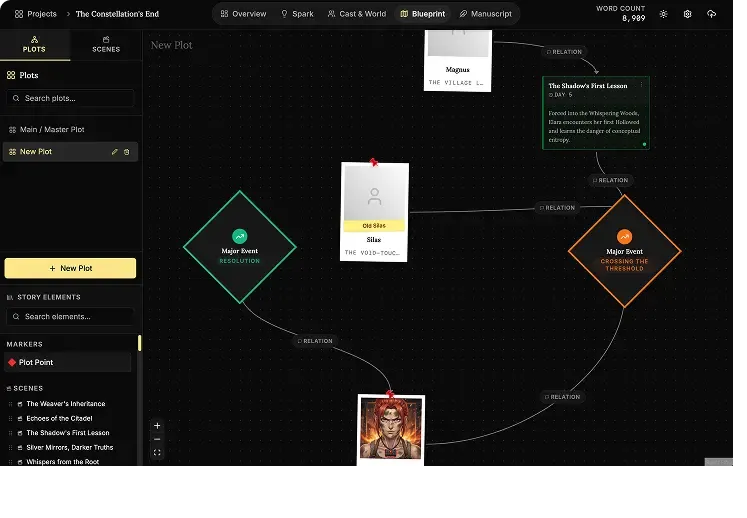
Map the term across scene cards, plotlines, arcs, and Timeline View. The Blueprint sits inside the same NovelOS Studio project as your characters, world, timeline, manuscript, goals, tracker, revision tools, and publishing exports.
Record the idea where it affects the book, test it in scenes, and revise it beside the surrounding prose. NovelOS Studio keeps the craft decision attached to the novel instead of leaving it in a separate worksheet.