Prose and Style
Morpheme
A morpheme is the smallest unit of language that carries meaning or grammatical function.
Morpheme in a story
Roots, prefixes, and suffixes can help writers construct related names, titles, and invented words whose relationships readers can infer.
Original fiction example
In the mountain language, var means oath, so Varin, Varak, and varless all carry a visible connection to sworn duty.
This example is original to the NovelOS glossary. It illustrates the term without borrowing a passage from a published novel.
Why writers use it
Use morphemes to make fictional terminology feel related rather than randomly assembled.
A useful revision question: Where does this device change what the reader understands, expects, or feels? If removing it leaves the passage unchanged, it may need a clearer function.
A common mistake
A perfectly systematic invented vocabulary can feel artificial if ordinary speakers never shorten, borrow, or distort words.
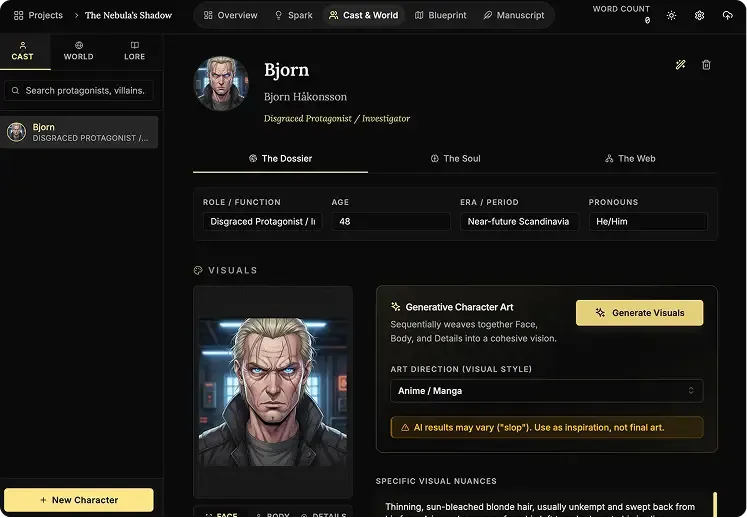
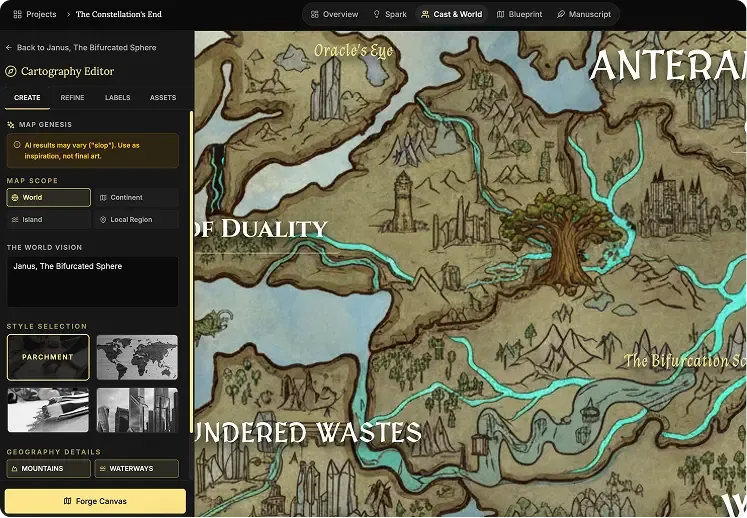
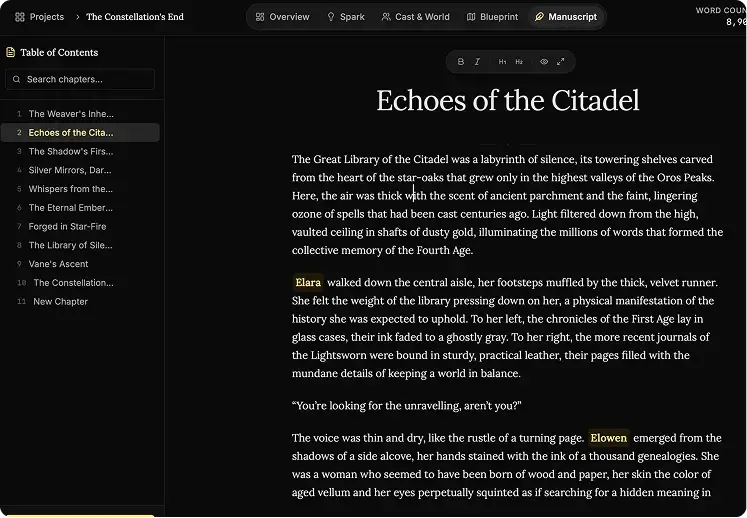
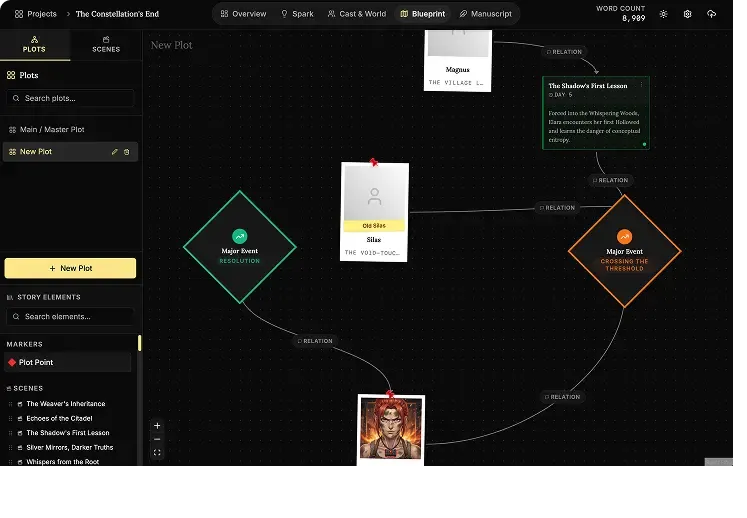
Use morpheme in NovelOS Studio
Refine clarity, rhythm, tone, repetition, and deliberate prose while preserving your voice. The Alchemist sits inside the same NovelOS Studio project as your characters, world, timeline, manuscript, goals, tracker, revision tools, and publishing exports.
Record the idea where it affects the book, test it in scenes, and revise it beside the surrounding prose. NovelOS Studio keeps the craft decision attached to the novel instead of leaving it in a separate worksheet.