Prose and Style
Dialogue
Dialogue is spoken communication represented within a narrative.
Dialogue in a story
Effective dialogue performs several jobs at once: characters pursue aims, manage relationships, reveal assumptions, conceal information, and change the scene.
Original fiction example
“Keep the key,” Lena says, placing it beside him. “You always preferred being the one who locked up.”
This example is original to the NovelOS glossary. It illustrates the term without borrowing a passage from a published novel.
Why writers use it
Use dialogue when the exchange itself creates pressure, discovery, or change.
A useful revision question: Where does this device change what the reader understands, expects, or feels? If removing it leaves the passage unchanged, it may need a clearer function.
A common mistake
Conversation that only transfers facts both characters already know will sound staged.
Use dialogue in NovelOS Studio
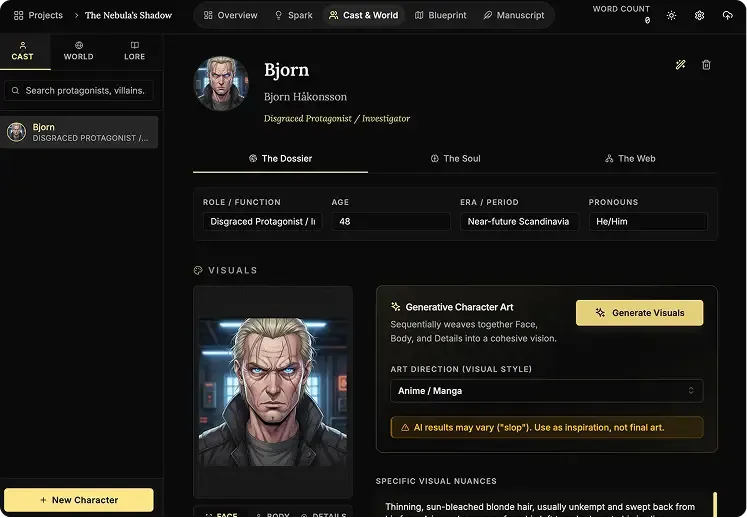
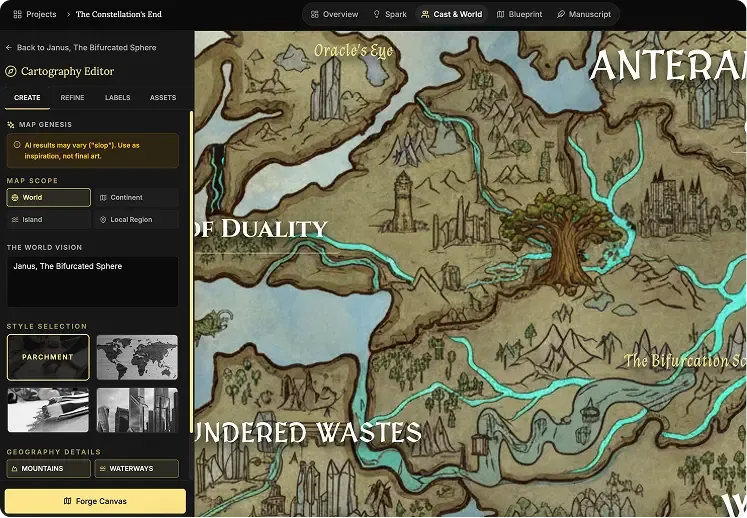
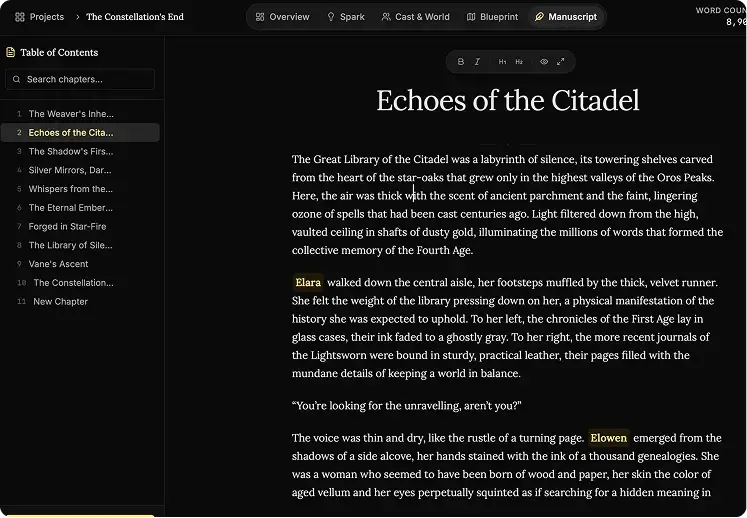
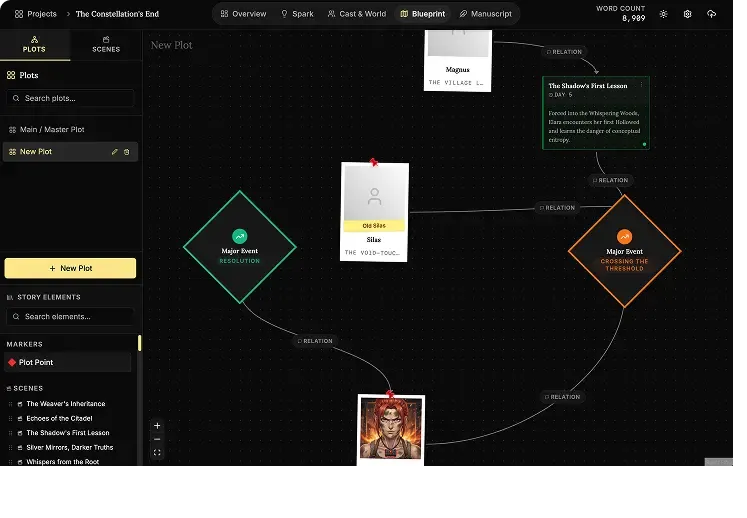
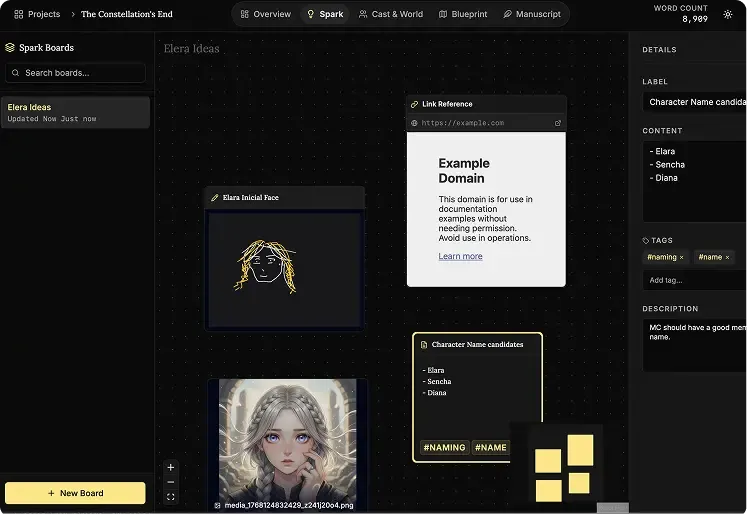
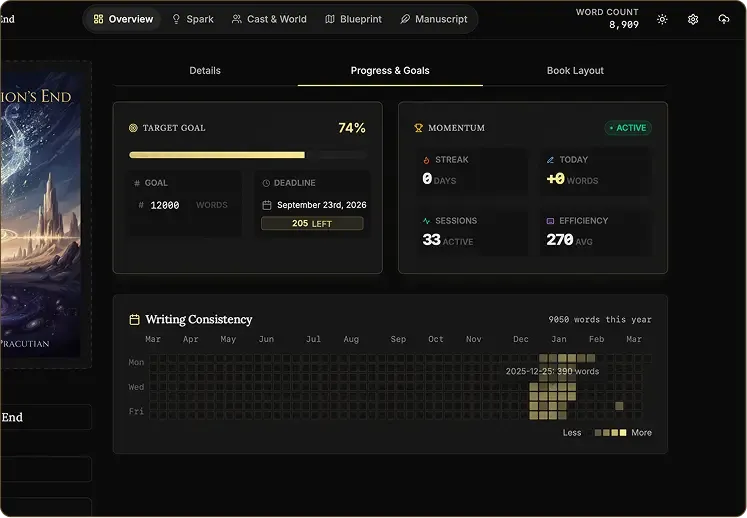
Refine clarity, rhythm, tone, repetition, and deliberate prose while preserving your voice. The Alchemist sits inside the same NovelOS Studio project as your characters, world, timeline, manuscript, goals, tracker, revision tools, and publishing exports.
Record the idea where it affects the book, test it in scenes, and revise it beside the surrounding prose. NovelOS Studio keeps the craft decision attached to the novel instead of leaving it in a separate worksheet.