Genre and Form
Comedy
Comedy is a form that uses incongruity, timing, misunderstanding, social exposure, and reversal to create amusement and often restore or rearrange community.
Comedy in a story
Comedy can be warm, dark, romantic, satirical, absurd, or farcical while still taking character desires seriously.
Original fiction example
A village fakes a royal visit to obtain road repairs, then must host the real monarch who arrives unannounced.
This example is original to the NovelOS glossary. It illustrates the term without borrowing a passage from a published novel.
Why writers use it
Use comedy to expose contradiction while allowing characters' urgent concerns to remain real to them.
A useful revision question: Where does this device change what the reader understands, expects, or feels? If removing it leaves the passage unchanged, it may need a clearer function.
A common mistake
Characters who know they are in a joke rarely create as much comic pressure as those pursuing sincere goals.
Use comedy in NovelOS Studio
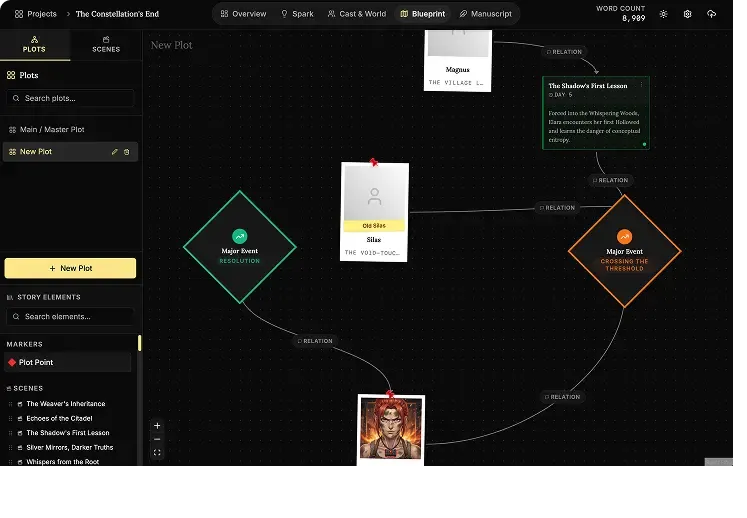
Shape the form through visual planning, connected scenes, plotlines, and arcs. The Blueprint sits inside the same NovelOS Studio project as your characters, world, timeline, manuscript, goals, tracker, revision tools, and publishing exports.
Record the idea where it affects the book, test it in scenes, and revise it beside the surrounding prose. NovelOS Studio keeps the craft decision attached to the novel instead of leaving it in a separate worksheet.