Scene and Sequel: The Handoff That Keeps a Novel Moving
Scene and sequel describe a causal handoff in fiction. A scene pursues a goal until conflict produces a changed situation. The sequel lets a viewpoint character register that change, interpret its meaning, face the options it creates, and choose the next objective. The units can occupy two chapters or four sentences. Their purpose is to make the next action arise from the previous outcome.
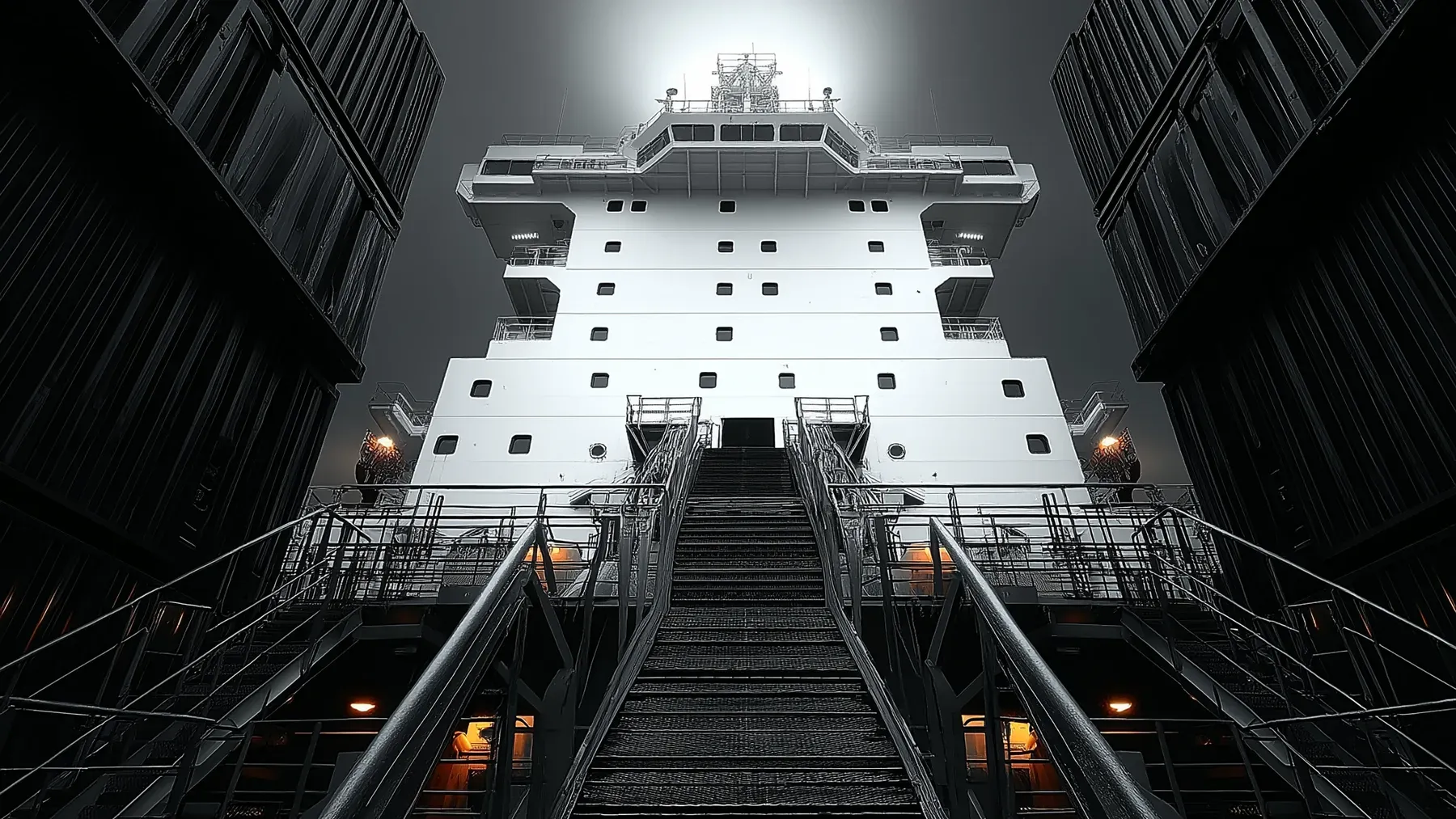
Picture an electrical engineer working the night crossing on a cargo ferry. The auxiliary generator is overheating while the vessel approaches a narrow channel in worsening weather. Her immediate goal is to stabilize it before the ship loses steering redundancy. She isolates a damaged coolant loop, resets the generator, and hears its pitch settle. Then she finds a safety relay that was deliberately bypassed before departure.
The repair scene has succeeded and still produced a worse problem. Someone accepted a known risk. The captain orders her to record ordinary wear and keep the ferry moving because the hold carries oxygen cylinders for the island clinic. Passengers are sleeping above the machinery space. Reporting the bypass could force an inspection and delay the medical shipment. Silence could leave everyone aboard exposed to a second failure.
The next objective should emerge from how the engineer understands that result. If the novel jumps directly to her breaking into the bridge records, readers may follow the action while missing why she chose investigation over obedience, immediate distress, or a coast guard call. The sequel is the missing conversion. It turns the relay was bypassed into I will obtain the maintenance log before we enter the channel.
The outcome must change the working problem
The action half of the model is often summarized as goal, conflict, and disaster. Jack M. Bickham uses disaster broadly in Scene & Structure. The character may fail, succeed at an unacceptable cost, or receive information that makes the original goal insufficient. What matters here is the delta between the situation at entry and the situation at exit.
At the ferry scene’s entrance, the working problem is mechanical: stabilize the generator. At its exit, the generator is running and the larger problem is ethical, institutional, and time-sensitive. The engineer now knows the failure was enabled by a deliberate bypass. The captain’s order attaches authority to the concealment. The approaching channel limits the time available to investigate or report it.
This distinction keeps the article separate from a general guide to structuring a scene. You still need a specific goal, resistance, tactics, and a turn. For scene-and-sequel revision, concentrate on what the outcome invalidates:
- Which goal has been completed, blocked, or made inadequate?
- Which fact can no longer be treated as true?
- Which resource, relationship, duty, or option has changed?
- What question now governs the character’s attention?
If the answer is only that the engineer feels upset, the outcome has not changed enough of the story. If she discovers the bypass and then continues the same repair plan with the same allies, authority, and risk, the revelation is decorative. A meaningful scene disaster prevents the character from returning to the conditions that existed before the scene.
Write two sentences in the outline: Before the outcome, she could… and After the outcome, she can no longer… In this case, she could assume the breakdown was accidental and cooperate with the captain inside normal procedure. After the outcome, she can no longer treat obedience as a neutral act. That loss of neutrality gives the sequel work to do.
The scene boundary should also be legible to the reader. Research on narrative comprehension offers a useful explanation, although it is descriptive research rather than a fiction formula. Jeffrey Zacks, Nicole Speer, and Jeremy Reynolds found that readers identify event boundaries around changes in goals, causality, characters, location, time, and interactions with objects. Clauses at boundaries also took longer to read. A practical craft inference follows: when a scene changes the character’s goal and causal model, readers need enough information to update their own model of the story.
That update can happen before or after a chapter break. End the scene when the engineer understands that the bypass changes her problem. Begin the next passage with the physical and mental consequences of that understanding. A break can emphasize the shift, yet typography cannot supply the causal handoff on its own.
Reaction identifies what the outcome means
Bickham’s full sequel moves through emotion, thought, and decision. Later summaries often divide the thought into dilemma and choice. These labels are useful when they describe a believable order of processing. They become mechanical when every setback receives one paragraph of feeling, one paragraph listing options, and a final declaration.
Begin with selective reaction. The engineer hears the generator running smoothly, which should mean relief. Instead, the regular vibration now feels like evidence of the concealed risk. She notices heat in the bypass wire, grease on the relay cover, and the captain’s message still glowing on her phone. Her body may shake after the immediate repair because action no longer occupies every part of her attention.
Reaction is not a recap of the machinery scene. It selects the details whose meaning changed. The engineer does not mentally replay every valve and warning light. She returns to the relay, the authorization seal, the medical cargo, and the ship’s position because those facts control what she can do next.
This selection creates an interpretive question: Was the relay bypassed to complete an urgent repair, or did someone knowingly send an unsafe vessel to sea? She cannot build a dilemma until she knows what decision she is actually facing. An argument with the second engineer could perform the same work as interior thought. So could checking the seal against a maintenance checklist, washing coolant from her hands, or walking past the sleeping passenger lounge on the way to the bridge.
The earlier guide to reaction after a major plot event develops emotional continuity in detail. The narrower task here is to let reaction change the next problem. Her fear makes an immediate coast guard call attractive. Her responsibility for the oxygen shipment makes delay costly. Her knowledge of marine procedure suggests that the bridge maintenance log could distinguish emergency repair from deliberate concealment. Feeling, value, and expertise reshape the option set.

Do not require the character to become calm before thinking. Emotion and analysis can overlap. She may misread a timestamp because her hands are still shaking, snap at a colleague, correct herself, and then realize the log was signed while the ferry was in port. The sequel feels alive when cognition carries residue from the event.
Keep the unresolved external pressure present. The channel pilot will board in twenty-two minutes. The weather report shortens visibility. The generator remains stable for now. A reflective passage can slow reading while story time continues. That difference prevents stillness from becoming stasis.
A dilemma needs options with different costs
Once the engineer understands the working problem, name the available actions. A true dilemma does not require two perfectly balanced choices. It requires at least two credible routes whose costs express different priorities.
She could report the bypass immediately. That protects passengers and creates an official record, while possibly stopping the ferry short of the island and delaying oxygen. She could obey the captain. That preserves the delivery and her position, while accepting an unknown mechanical risk and helping conceal evidence. She could inspect the bridge log first. That may reveal who authorized the bypass, but access requires leaving the machinery space and spending the final minutes before the channel on an unauthorized search.
The third route is often where agency becomes visible. It should not erase the first two costs. Investigation consumes time, risks discipline, and may produce inconclusive evidence. It becomes her choice because she believes a signed log will let her make a defensible report before the most dangerous part of the crossing.
Test each option with three questions:
- What value does it protect? Passenger safety, medical duty, loyalty, livelihood, truth, or lawful procedure.
- What does it expose to loss? Time, evidence, authority, cargo, trust, employment, or life.
- What immediate action would commitment require? Place a call, change course, open a locker, wake a witness, or remain at the controls.
The last answer turns dilemma into story. She decides to investigate remains abstract. She leaves the generator to the second engineer, takes the captain’s access card, and heads for the bridge locker before the pilot boat arrives supplies a new objective, method, deadline, and source of opposition.

The decision should also inherit the preceding emotion and analysis. If she chooses the locker because the plot needs a break-in, the sequel has failed. If she chooses it because the log can resolve whether continued obedience is tolerable before the channel removes safe alternatives, the next scene is causally earned.
This handoff can be audited beside scene cards built around cause and effect. The outcome card ends with a changed condition. The sequel record explains how that condition becomes the next card’s goal. When an objective appears without a decision, add the missing bridge. When a dilemma ends without a concrete verb and object, the story is still processing.
Compress, delay, or distribute the handoff
Scene and sequel do not require alternating action and reflection chapters. Bickham emphasizes that sequel length is flexible and that urgent pressure can collapse it to a few words. Jordan Rosenfeld likewise treats contemplative scenes as strategically placed slowdowns that should eventually return the character to action.
Choose the form according to impact, time, complexity, viewpoint, and the amount of genuine uncertainty in the decision:
| Handoff form | Best use | Ferry example |
|---|---|---|
| Immediate beat | One response is physically unavoidable | The relay sparks; she jerks the breaker down and shouts for insulation |
| Compressed paragraph | Options are legible under a short deadline | She weighs calling the coast guard against checking the log, then takes the access card |
| Developed passage | The outcome changes several duties or relationships | She crosses the passenger deck, speaks with the clinic courier, and revises what the oxygen delay would mean |
| Delayed sequel | Survival action prevents immediate processing | She steers through the channel first, then confronts what the bypass implies in harbor |
| Distributed sequel | Another viewpoint or social action carries consequence | The second engineer notices her departure, interprets it as betrayal, and warns the captain |
Urgency can postpone reflection without canceling it. If a fire starts after the bypass is found, the engineer must act. Later, the smell of burned insulation or the official incident form can reopen the unprocessed dilemma. Bickham advises writers to ask whether a skipped sequel needs completion when time becomes available.
Avoid paying for the same consequence repeatedly. One passage can establish her shock and moral conflict. Later scenes should develop new effects: the colleague’s distrust, altered access, public scrutiny, or a changed judgment about the captain. Repeatedly returning to she could not believe the relay had been bypassed freezes the causal chain.
Genre affects proportion. A thriller may compress the handoff inside movement. A romance may spend longer on how an outcome changes the meaning of a relationship. Literary fiction may place much of the action inside perception while retaining a precise shift in intention. The underlying requirement remains stable: consequence changes the character’s model, and that changed model produces action.
Map the handoff in NovelOS Studio
The scene-and-sequel chain becomes difficult to audit when outcomes live in an outline, emotional consequences live in character notes, and new goals appear only in the manuscript. NovelOS Studio keeps those layers in one project so a writer can trace how one changed situation becomes the next pursuit.
Use the ferry sequence as a connected workflow:
- Collect alternative outcomes and decisions in Spark. Test whether a bypassed relay, forged inspection, or accidental repair creates the most demanding handoff before committing it to the outline.
- Record the engineer’s professional duty, fear of causing a medical delay, relationship with the captain, tolerance for rule breaking, and knowledge limits in The Oracle. These details determine which options feel credible.
- Build the ferry layout, generator system, access rules, channel timing, weather, clinic cargo, crew authority, and reporting procedure in The Architect. The dilemma needs stable constraints to carry real cost.
- Place the repair goal, tactics, relay discovery, reaction, interpretive question, options, decision, and bridge-locker objective on Scene Cards in The Blueprint. Timeline View can verify that the twenty-two-minute deadline, pilot arrival, weather change, and crew movements align.
- Draft the reaction and decision in The Manuscript. Read the final paragraphs of the repair beside the opening paragraphs of the bridge search and confirm that the causal handoff survives the chapter break.
- Use a selected passage with the Prose Polisher perspectives in The Alchemist to explore sensory, action, or atmospheric revisions. Retain only changes that preserve technical facts, viewpoint access, and the intended pace.
- Set a scene or word target in Progress and Goals so the audit moves through the manuscript at a measurable rate instead of expanding every sequel by default.
For the final structural pass, read only six fields across the novel: outcome, immediate attention, interpretation, available options, decision, next objective. Vary their expression freely in the prose. Some handoffs will take a line; others will carry a chapter. A missing field deserves attention when the next action feels arbitrary, consequences disappear, or reflection cannot find a direction.
Scene and sequel work because they preserve agency across change. The ferry engineer repairs one system and discovers a larger failure. She absorbs what the evidence means, chooses which cost she can accept, and enters the bridge with a goal the previous scene created. NovelOS Studio keeps that complete movement visible, helping every pause earn action and every new objective retain its cause.
Sources and further reading
- Jack M. Bickham, Scene & Structure, especially the chapters on sequel structure, emotion, thought, decision, compression, delayed sequels, and pacing.
- Jordan E. Rosenfeld, Make a Scene, especially the chapters on contemplative scenes, aftermath, reflection, transitions, and decision endings.
- Jeffrey M. Zacks and Khena M. Swallow, “Event Segmentation”: goals, subgoals, prediction error, meaningful event boundaries, and event-model updating.
- Jeffrey M. Zacks, Nicole K. Speer, and Jeremy R. Reynolds, “Segmentation in Reading and Film Comprehension”: changes in goals, causality, time, location, characters, objects, and reading at event boundaries.
- K. M. Weiland, “How to Get the Most Out of Your Sequel Scenes”: the goal, conflict, outcome, reaction, dilemma, and decision weave.