How to Write Good Dialogue in a Novel Without Making It Sound Fake

Bad dialogue can break a beautiful novel faster than a weak description ever will.
A reader can forgive a paragraph that runs a little long. A chapter opening can recover from a slow sentence or two. But when characters start speaking in ways that feel staged, overexplained, interchangeable, or strangely convenient, the spell goes quickly. The page stops feeling like life under pressure and starts feeling like an author arranging furniture.
That is why learning how to write good dialogue matters so much.
Dialogue is not there just to make the page less dense. It carries conflict, voice, pacing, exposition, intimacy, class, status, and emotional temperature all at once. A good line of dialogue does more than sound plausible. It changes the scene. It reveals what someone wants, what they are hiding, how they think, and how much pressure the moment can bear.
That is also why dialogue is harder than it looks.
Real people speak messily. Fictional people cannot. Real conversations wander, repeat themselves, dodge the point, rely on shared context, and collapse into filler. On the page, some of that texture helps. Too much of it kills momentum. A novelist has to create the illusion of real speech while still making every exchange worth the reader’s attention.
That is the craft problem underneath almost every dialogue question: not realism alone, but shaped realism.
What Good Dialogue Actually Does
The easiest mistake is to think dialogue exists only to deliver information.
If that is all it is doing, it usually becomes wooden very quickly. Characters start saying things they would never actually say to each other because the author needs the reader to know them. The scene becomes a disguised briefing.
Good dialogue usually carries several jobs at once.
It can:
- reveal character
- create or increase tension
- change the power balance in a scene
- imply history without summarizing it
- expose conflict between what someone says and what they mean
- move the plot forward
- give rhythm and relief to the page
That layered function is what makes dialogue feel alive. Two characters should almost never speak only to exchange facts. They are speaking because something is at stake, even if that stake is small. Approval. Permission. Control. Protection. Seduction. Delay. Deflection. Truth. Escape.
Once a writer understands that, dialogue gets easier to judge. The question is no longer “Does this sound like something a person might say?” The better question is “What is this line doing to the scene?”
Dialogue Should Not Sound Exactly Like Real Life
This is one of the hardest lessons for newer fiction writers because it feels counterintuitive.
Real speech is full of repetition, filler, overlap, digression, and accidental vagueness. People interrupt themselves. They abandon sentences. They overuse the same phrases. They answer questions indirectly because they are distracted, tired, defensive, bored, polite, or uncertain.
Some of that is useful on the page. Too much of it becomes drag.
Fictional dialogue needs selection. It should preserve the energy and unpredictability of real speech without copying every dead patch inside it. That is why strong dialogue often feels more vivid than actual conversation. It is reality edited for consequence.
A novelist does not owe the reader transcription. The novelist owes the reader pressure.
That does not mean every character must sound clever all the time. Good dialogue is not a string of quotable lines. In fact, dialogue becomes less believable when every line feels polished for applause. Naturalism still matters. But naturalism on the page is crafted, not copied.
Start With Character Voice, Not Verbal Style
When writers talk about voice in dialogue, they often focus too quickly on catchphrases, accent markers, or witty line endings.
Those surface traits can help, but they are not the foundation.
A believable voice begins with perspective.
What does this character notice first? What do they avoid naming directly? How much do they explain? Do they speak in images, facts, jokes, commands, apologies, questions, half-finished thoughts, or polished statements? Do they escalate conflict head-on, or do they circle it? Are they usually trying to impress, soothe, dominate, disappear, charm, test, or protect?
Once those pressures are clear, line-level voice starts taking shape on its own.
This is why dialogue often sounds flat when multiple characters are written from the same emotional engine. They may have different backstories, but if they all process tension in the same way, the voices blur together. One of the strongest tests for dialogue is to remove the tags temporarily and ask whether the reader could still tell who is speaking.
If the answer is no, the issue may not be the wording itself. The issue may be that the characters are not differentiated enough at the level of thought and motive.
Subtext Is Where Dialogue Becomes Interesting
Some of the best dialogue scenes are not interesting because of what the characters say directly. They are interesting because of what the scene teaches the reader to hear underneath the lines.
That is subtext.
Subtext appears when spoken language and emotional truth are not perfectly aligned. A character says, “Do whatever you want,” while clearly hoping the other person will stay. Someone asks, “Is that what you’re wearing?” and the line lands less as curiosity than as control. One character says, “I’m fine,” and every detail in the scene shows they are not fine at all.
Subtext matters because people rarely say exactly what they mean when they are under emotional pressure. Pride, fear, shame, desire, status, and habit all interfere. Fiction becomes more charged when the writer uses that interference deliberately.
This is also why dialogue should be read together with action, context, and silence. Sometimes the most important part of a conversation is the line that never gets said. Sometimes it is the pause after a line. Sometimes it is the fact that one character answers the wrong question on purpose.
Writers who want stronger dialogue often need stronger subtext, not more dramatic wording.
Tension Makes Dialogue Move
Dialogue becomes lifeless when both characters want the same thing from the conversation and are willing to say it plainly.
That does happen in life. On the page, it usually produces flatness.
Interesting dialogue tends to contain opposition, even when the opposition is subtle. One character wants closeness while the other wants distance. One wants truth while the other wants control. One wants to confess while the other wants to avoid embarrassment. One wants forgiveness while the other wants proof.
This does not mean every scene should be an argument. It means the characters should not be emotionally stationary.
The cleanest way to test a dialogue scene is to ask:
- What does each person want right now?
- What is each person afraid of?
- Who has more power at the start of the exchange?
- Who has more power by the end?
- What changes because of this conversation?
If nothing changes, the scene may be pleasant, funny, or graceful, but it may not need to exist in its current form.
Exposition Through Dialogue Is Usually Where Trouble Starts
Writers often sense when dialogue sounds wrong, but they do not always know why. A common reason is exposition.
Characters begin saying things that are true in the world of the novel but false to their relationship in the scene.
This is how readers end up with lines like:
“As you know, brother, our father disappeared ten years ago on the night of the fire.”
No brother says that to another brother unless he has suffered a blow to the head.
The problem is not exposition itself. Fiction needs exposition. The problem is misplacing it in speech that has no plausible reason to exist.
Good dialogue can absolutely carry information. It just needs a dramatic reason to do so. Characters reveal information when they are arguing over it, withholding it, correcting it, weaponizing it, misunderstanding it, or trying to force another person to acknowledge it. In other words, exposition works better when it arrives inside conflict or desire.
If a line exists mainly for the reader, the reader can usually feel it.
People Rarely Say the Most Important Thing First
One simple craft principle improves dialogue quickly: characters often approach the center of the scene indirectly.
They circle. They test. They joke. They delay. They bring up logistics before emotion. They mention someone else’s problem before naming their own. They ask safe questions first. They pretend the conversation is about one thing when it is really about another.
That movement matters because it creates shape inside the exchange.
A conversation that begins exactly where it needs to end often feels artificial. A stronger scene usually has approach. The reader senses where the emotional center might be, but the characters have to move toward it unevenly.
This does not mean dragging the scene out. It means giving the scene progression.
Silence, Beats, and Action Matter as Much as the Lines
Dialogue on the page is not only speech. It is speech plus interruption, gesture, reaction, avoidance, distance, eye contact, physical environment, and the exact moment someone decides not to answer honestly.
That is why silent beats matter so much.
A character folding a napkin too carefully can say more than another line of denial. Someone looking at the door before replying can change the meaning of the next sentence. A dropped glass, a hand on a railing, a text left unread, a laugh that comes half a second too late: these all participate in dialogue even though they are not dialogue.
Strong spoken scenes usually depend on this interplay. The writer is not just staging words. The writer is staging pressure.
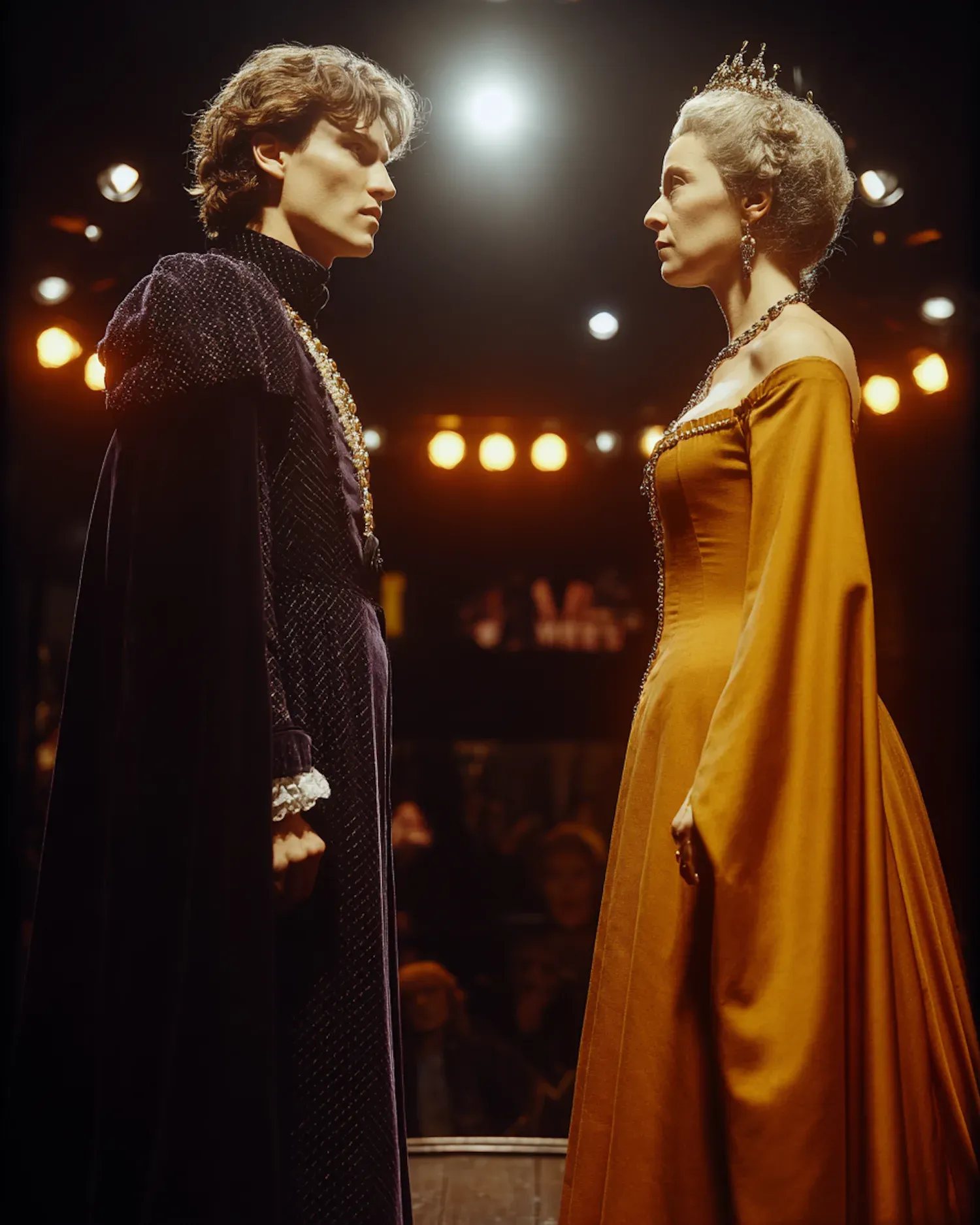
This is especially important in emotionally loaded scenes. If every feeling is spoken directly, the scene can become heavy and overdeclared. If everything is left unsaid, the scene can become vague. Beats help balance directness and implication.
Cut the Parts That Sound Like Writing
Many dialogue problems are revision problems, not drafting problems.
A first draft often needs excess. Writers use dialogue to discover what the characters think, what the scene is about, and what emotional truth is hiding under the exchange. That is normal.
The trouble comes when discovery draft lines stay on the page unchanged.
This is where revision becomes essential. Good dialogue editing is usually subtractive. Cut the line that explains what the previous line already implied. Cut the line that says the obvious thing no one under pressure would say. Cut the overactive dialogue tag. Cut the clever reply that makes the character sound like the author. Cut the polite throat-clearing if the scene gets stronger without it.
Dialogue often improves when it becomes slightly harder, not easier. Not confusing. Just less overassisted.
Multi-Character Scenes Need Extra Control
Writing dialogue between two characters is difficult enough. Add three, four, or six speakers and the scene can collapse into blur very quickly.
The main danger is not only confusion about who is speaking. It is diffusion of focus.
In a large-group conversation, not everyone needs equal presence. Usually one or two characters are still carrying the central tension, and the rest are shaping the pressure around them. One interrupts. One escalates. One misreads the room. One changes the subject. One says the thing everyone else was avoiding.
A useful rule is that each additional speaker should change the scene’s power dynamics somehow. Otherwise they may be adding noise more than value.
This is also where paragraph control matters. Separate speakers cleanly. Use action to anchor identity. Let the reader feel the center of attention move across the room instead of flooding the scene with equal-volume remarks.

Large-group dialogue scenes are often strongest when the writer thinks less about realism and more about choreography.
Dialogue Should Match the Novel, Not Just the Character
This is a subtler point, but it matters.
A novel has its own tonal world. Even when each character has an individual voice, the dialogue still belongs to the broader texture of the book. A dark literary novel, a sharp commercial thriller, a screwball romance, and a mythic fantasy should not all handle speech the same way.
That does not mean characters become less distinct. It means their distinctness should still make sense inside the larger storytelling contract.
Writers often feel something is wrong in dialogue scenes when the problem is actually tonal mismatch. A line may be witty in isolation but belong to a different novel. A line may be realistic but too flat for the intensity of the book around it.
This is one reason dialogue revision should happen in context, not only line by line.
Dialogue Scenes Still Need Structure
A single exchange has its own beginning, middle, and end.
Someone enters the conversation wanting something. Pressure develops. Information shifts, emotion rises, or power changes. Then the conversation lands somewhere new. It may end in clarity, silence, rupture, seduction, humiliation, relief, or deeper uncertainty. But it should land somewhere.
This is where structure thinking becomes useful even at the scene level. If you are shaping overall story movement too, Save the Cat story structure can help clarify where dialogue scenes should pivot or intensify. If you are working at the larger arc level, 3 Act Structure vs Hero’s Journey can help you see which conversations actually change the course of the novel and which ones are only repeating known tension.
Dialogue is not separate from structure. It is one of the main ways structure becomes visible.
Revision Questions That Make Dialogue Better
When a scene feels off, these questions usually reveal why:
- Could the reader identify each speaker without a tag on every line?
- Is someone avoiding the real subject of the scene?
- Does each speaker want something different?
- Is there too much explanation and not enough pressure?
- Does the scene change power, information, emotion, or decision by the end?
- Would the conversation get stronger if it started later?
- Would the exchange hit harder if one line were removed?
Questions like these are more useful than chasing “naturalness” in the abstract. They give the writer something to test.
If You Want Outside Craft Perspectives Too
Sometimes it helps to compare your instincts against other working craft advice, especially when revising.
These are useful dialogue resources from outside NovelOS Studio:
- Reedsy’s writing dialogue course is useful for plot-and-character-focused dialogue basics.
- Writer’s Digest on writing dialogue is strong on tension and scene movement.
- MasterClass on realistic dialogue is helpful when you want to think about speech patterns and observation.
Those kinds of references are most valuable when they sharpen your ear without replacing your own judgment about the book you are actually writing.
Turning Better Dialogue Into Better Pages
Once the principles are clear, the practical problem returns: how do you keep all of this visible while the novel is still moving?
Dialogue rarely fails because a writer does not care about it. It fails because voice notes, character psychology, scene order, structural pressure, and revision decisions get scattered across too many places. The writer remembers the scene’s intention but loses track of the exact conversational shape that made it work.
Dialogue usually weakens when scene logic, character pressure, and draft revision drift too far apart. NovelOS Studio helps keep those pieces close enough together that a writer can revise spoken scenes in context instead of patching isolated lines after the fact.
NovelOS Studio Features That Help Dialogue Stay Sharp
Dialogue gets better when the writer can hold character motive, scene purpose, and draft rhythm in view at the same time.
- A scene tension map for dialogue-heavy chapters, The Blueprint, helps break a chapter into Scene logic, test where conversations shift power, and use Timeline View to catch pacing drift across the full sequence.
- A conversation snippet board for collecting voice ideas, Spark Ideation, is useful for storing fragments of banter, argument patterns, character phrases, and half-formed exchanges before they vanish.
- A character voice and motivation workspace for fiction, The Oracle, helps keep each speaker’s fears, contradictions, relationships, and verbal habits distinct.
- A drafting editor built for revising spoken scenes, Manuscript, makes it easier to tighten lines, rebalance beats, and hear whether the page is carrying too much explanation.
- For books where speech depends heavily on culture, hierarchy, or invented setting, a story setting reference system for consistent language can keep terminology and social context close to the scenes that need them.
The goal is not to over-engineer every conversation. The goal is to make revision less blind.
Why Good Dialogue Feels Effortless Only After the Work Is Done
The best dialogue often looks easy once it is finished. It feels inevitable, light, natural, perfectly timed.
That effect is deceptive.
Behind almost every strong dialogue scene is a chain of invisible decisions about tension, voice, silence, structure, implication, pacing, and what not to let a character say too soon. That is why the craft matters. Good dialogue is not what happens when a writer simply copies speech from real life. It is what happens when the writer shapes speech until it carries more life than transcription ever could.
That is the difference readers can feel, even when they cannot name it.